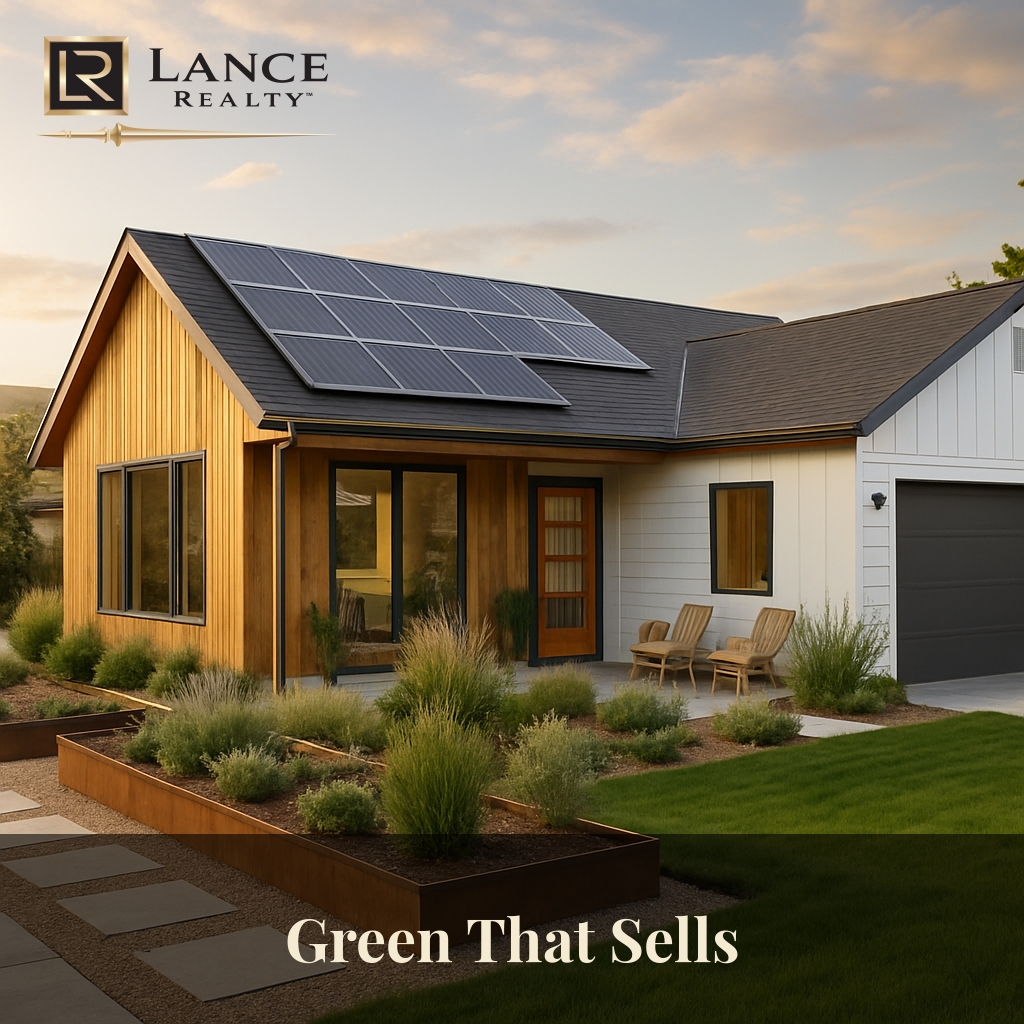
Going Green: Which Eco-Friendly Upgrades Actually Help Sell Your Boise Home
I get asked all the time whether green upgrades actually help sell a home in Boise. The answer isn't yes or no. It's "depends what you mean by green."
Some eco-friendly features move the needle with buyers. Others are nice-to-have but don't add measurable value. And a few cost more than you'll ever recover.
Here's what I'd be looking at if I were in your shoes.
Energy-Efficient Appliances: Practical Wins Over Theory
When a buyer walks through your home, they're not thinking about carbon footprint. They're thinking about monthly costs. That's where energy-efficient appliances make sense.
A new Energy Star dishwasher or fridge doesn't just save electricity. It tells a buyer your home has been maintained. It signals lower utility bills. And it removes one more item from their mental to-do list.
If you're replacing appliances anyway, go efficient. If your appliances work fine, don't replace them just to add a sticker. That's not where your prep budget should go.
In August 2026, Boise had 523 active listings and 309 homes under contract. Homes that showed well and felt move-in ready averaged 30 days on market. When buyers have options, little details like updated appliances can be the difference between an offer and a pass.
Water-Saving Fixtures: Easy, Affordable, Effective
Low-flow faucets and showerheads are one of the best green upgrades you can make. They're inexpensive. They're quick to install. And Idaho buyers notice.
Water isn't cheap here. Buyers know that. A simple upgrade like a water-efficient toilet or a low-flow kitchen faucet signals you've thought about the home's long-term costs. It doesn't have to be flashy. It just has to work.
If you're updating bathrooms or the kitchen anyway, make sure the fixtures you choose have WaterSense labels. It won't add thousands to your sale price, but it adds to the overall impression that this home has been cared for.
And honestly, most buyers won't even consciously notice. They'll just feel like your home is the smarter choice.
Insulation and Weatherproofing: The Invisible Upgrade That Pays
Buyers don't tour insulation. But they feel it.
A home that stays cool in August and warm in January without cranking the HVAC feels better. It costs less to own. And if you can talk about your utility bills without wincing, that's a conversation worth having.
If your attic insulation is thin or your windows leak air, fixing that before you list makes sense. Not because buyers will marvel at your R-value, but because they'll notice the home feels comfortable.
Homes in neighborhoods like Harris Ranch, Columbia Village, and East Valley vary a lot in age and build quality. Some have newer windows and solid insulation. Others don't. If yours doesn't, and you're planning to sell in the next year, weatherproofing is one of the best investments you can make.
Solar Panels: The Complicated One
Solar panels are a mixed bag.
If you own them outright, they can be a selling point. Buyers like the idea of lower electric bills. But if you're leasing, or if the panels come with a loan that transfers to the buyer, you've just added complexity to your sale.
Not every buyer wants to take on a solar lease. Some lenders won't approve loans with active solar agreements attached. And even when it works, it slows things down.
I'm not saying don't have solar. I'm saying if you're thinking about adding panels just to help your home sell, don't. The ROI isn't there, and the complication usually isn't worth it.
If you already have solar, make sure you've got clear documentation on ownership, warranties, and savings. That's the kind of thing that comes up during inspections and negotiations, and you don't want to be scrambling for answers then.
Sustainable Materials: When Renovation Is Already in the Plan
If you're updating flooring, countertops, or cabinets, sustainable materials are worth considering. Bamboo flooring, recycled glass counters, reclaimed wood... they can look great and tell a story.
But here's the catch. Most buyers won't pay more for sustainable materials. They'll pay for materials that look good and feel durable.
So if you're choosing between a high-end recycled countertop and a mid-range quartz slab, pick the one that looks better and fits your budget. Don't overspend on sustainability alone.
Where sustainable materials shine is when they overlap with style. A reclaimed wood accent wall in a home in The Hickories or Dry Creek Ranch can feel rustic and intentional. Bamboo flooring in a modern home in Riverside Village fits the vibe. Just make sure it fits your home first.
LED Lighting: The No-Brainer Swap
Swap out old incandescent bulbs for LEDs before you list. It's cheap, it's easy, and it makes your home look brighter and more modern.
Buyers notice lighting. A home that feels dim or has yellowed bulbs feels dated. A home with clean, bright LED lighting feels fresh.
This is one of those upgrades that costs you maybe $50 and takes an afternoon. Do it.
Smart Thermostats: The Feature Buyers Expect
A programmable or smart thermostat is one of those upgrades that has crossed over from nice-to-have to expected.
Buyers like the control. They like the energy savings. And if they're comparing two similar homes and one has a Nest or Ecobee and the other has a manual dial from 2003, guess which one feels more current.
If you don't have one, add it. It's $150 to $250, and it's one more thing that signals your home is move-in ready.
What About LEED Certification or Green Labels?
Unless you're selling a brand-new custom build, skip it.
Green certifications cost money and time, and most buyers in Boise won't know what they mean or care. They care about the features themselves, not the paperwork.
If your home already has a certification, great. Mention it. But don't chase one just to list your home.
Positioning Green Features the Right Way
Here's what matters. If you've made green upgrades, they need to show up in your listing, your photos, and your conversations with buyers.
That means professional photos that highlight updated fixtures. A listing description that mentions energy-efficient appliances, new insulation, or solar panels in a clear, benefits-focused way. And a strategy for talking about utility savings without sounding preachy.
Most sellers don't think about this. They assume buyers will notice. They won't. You have to make it obvious. That's where Why Professional Photography Matters for Middleton Sellers and How the Right Listing Description Helps Sell Your Meridian Home Faster come into play. The same principles apply in Boise.
When I help sellers position their homes, we don't just list features. We connect them to what buyers actually want. Lower costs. Less maintenance. A home that feels modern and thoughtful. That's the real value of going green.
What I'd Do If I Were Selling Right Now
If I were prepping a Boise home to sell in September 2026, here's my green checklist:
Swap all bulbs to LED. Add a smart thermostat if I don't have one. Replace any old, inefficient appliances that are on their last leg anyway. Check insulation and weatherstripping, and fix any obvious air leaks. Upgrade to low-flow fixtures in bathrooms and the kitchen.
That's it. Nothing extreme. Nothing that costs more than it returns. Just practical upgrades that make the home feel smarter and more efficient.
And then I'd make sure every one of those upgrades showed up clearly in the listing, the photos, and the way I talked about the home with buyers.
The Market Context You Need to Know
Right now, Boise's market is balanced. In August 2026, we had 523 active listings, with 309 homes going under contract and 326 closing. The median sold price was $566,625, and homes averaged 30 days on market.
That's not a seller's market where anything sells. And it's not a buyer's market where you have to give the house away. It's a market where preparation and positioning matter.
Across Ada County, inventory is up. Active listings hit 1,908 in August 2026. Homes are taking a little longer to sell compared to the spring rush. Average days on market countywide were 42.
What that means is buyers have time to be picky. They're comparing homes. They're weighing features. And when they see two similar homes, one that feels updated and efficient and one that feels dated and expensive to run, they're choosing the first one.
Your job isn't to turn your home into a solar-powered showcase. It's to make sure the green upgrades you do have are visible, practical, and clearly valuable to the next owner.
Have more questions about selling your Boise home? Visit our Boise Home Selling FAQ for straight answers on pricing, closing costs, timing, and more.
Barry Lance | Owner/Broker/Realtor® | 208-488-1433 | [email protected] | LanceRealty.com



