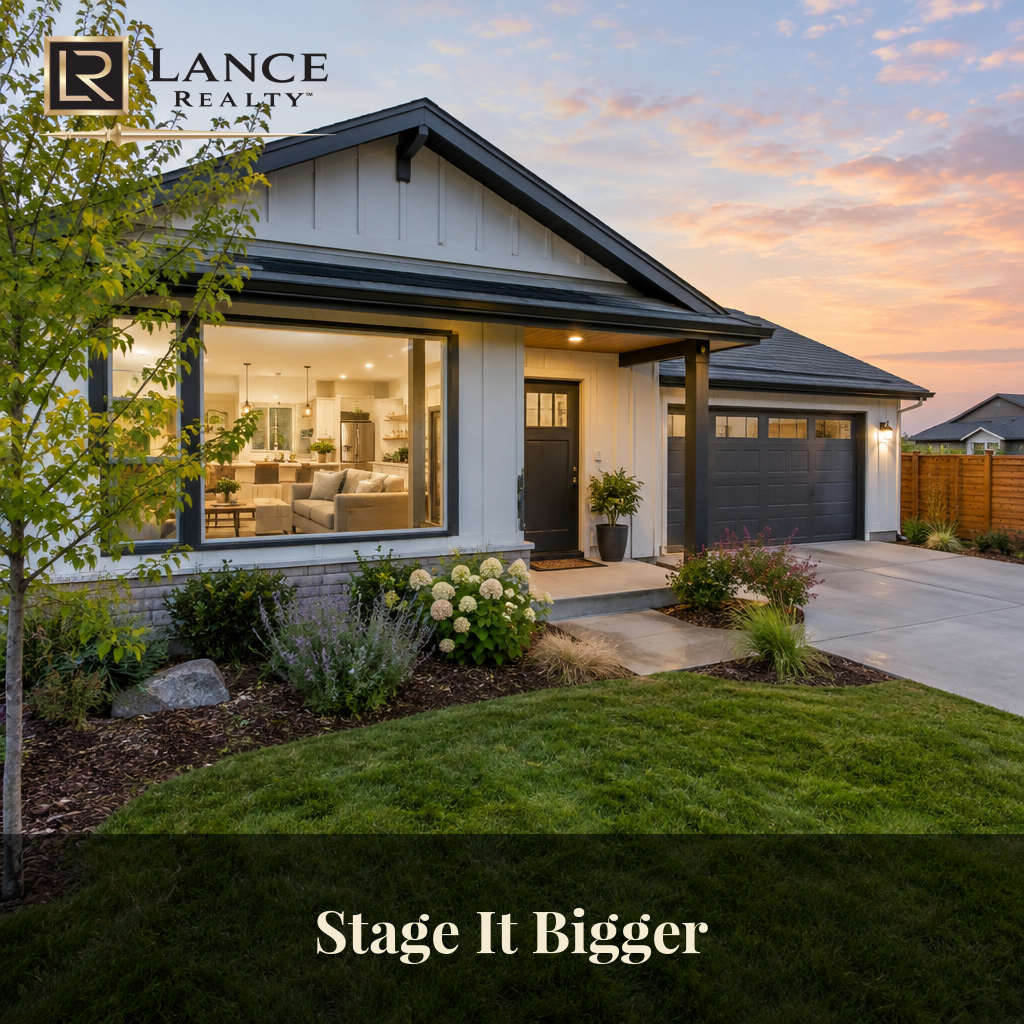
How to Stage a Smaller Star Home So Buyers See More Space, Not Less Square Footage
Here's what I'm seeing in Star right now. You've got a solid home. Three bedrooms, maybe 1,600 square feet, nice yard, good bones. But when buyers walk in, their first reaction isn't "this is cozy," it's "this feels tight." And in a market where September 2026 brought 165 active listings in Star with a median list price of $699,000, buyers are comparing your home to every other option they toured that week. If your space feels smaller than it actually is, you're losing equity before the showing even ends.
Small doesn't mean less valuable. But unstaged small absolutely costs you money. The good news is that staging a smaller home isn't about hiding the square footage. It's about showing buyers how every inch works, how the flow makes sense, and how the home fits their actual life without feeling cramped. I'm going to walk you through exactly how to do that.
Start With What's Taking Up Space That Shouldn't Be There
Before you buy a single staging piece, walk through your home and get honest about what's making it feel smaller. Oversized furniture is the biggest offender. That sectional you love might be perfect for movie night, but if it's blocking sightlines to the dining area or making buyers turn sideways to get past the coffee table, it's costing you offers.
In September, Star homes averaged 44 days on market. That's faster than the 48 days we saw in August, but it's still longer than the 63 days we were seeing back in September 2025. Buyers are taking their time. And when they walk into a home that feels tight, they don't slow down to imagine how they'd rearrange it. They move on to the next showing.
Same goes for the stuff on your counters, your bookshelves, your nightstands. Every surface that's covered with things tells buyers there isn't enough storage. Clear the counters except for one or two intentional items. Box up half your books. Put away the bathroom counter clutter. If you're thinking "but I need all that," then the house isn't staged yet. You're still living in it. Those are two different goals.
Use Furniture That Does Two Jobs
Multi-functional furniture isn't a compromise. It's a strategy. A bench with storage underneath shows buyers how a small entryway can handle coats, shoes, and backpacks without looking like a mess. An ottoman with a tray on top works as a coffee table and extra seating. A daybed in a smaller guest room doubles as a couch, which makes the room feel like a flex space instead of a cramped bedroom.
This works especially well in Star homes where buyers are drawn to the lifestyle but might be coming from a bigger home in Eagle or Meridian. They want the small-town feel, the lot size, the community vibe. But they're also wondering if they're giving up too much space. When you stage a room to show it can handle more than one function, you're answering that question before they ask it.
In neighborhoods like Langtree, Seneca Springs, or Milestone Ranch, buyers are often comparing your home to newer builds with open layouts and higher ceilings. You can't add square footage, but you can absolutely show them how your floor plan works smarter. A dining area that also functions as a homework station or a home office? That's a selling point, not a limitation, if you stage it that way.
Go Vertical With Storage and Keep Floors Clear
Buyers scan a room in about three seconds. What they're looking for, whether they realize it or not, is open floor space. The more floor they can see, the bigger the room feels. So if you've got storage sitting on the floor, baskets stacked in corners, or low furniture that creates visual clutter, you're shrinking the room before they even take a step inside.
Vertical storage fixes this. Floating shelves, tall narrow bookcases, wall-mounted hooks, anything that pulls storage up and off the floor. This is especially helpful in smaller bedrooms, laundry rooms, and entryways. If you can see clean floor from wall to wall, the room reads as bigger.
And here's the thing buyers won't say out loud but absolutely notice: if the floors are clear and the walls are doing the work, they assume the home has better storage than it actually does. That assumption is worth real money when it comes to pricing your home in a market where the median sold price in Star hit $665,189 in September, up from $609,000 in August.
I've walked through homes in Star Ridge Estates and Shooting Comet where sellers nailed this. Bedrooms felt spacious because the only furniture touching the floor was the bed and one nightstand. Everything else was mounted, hung, or stored vertically. It works.
Let Natural Light Do the Heavy Lifting
Natural light is the cheapest staging tool you have, and most sellers don't use it nearly enough. Open every blind, pull back every curtain, clean every window inside and out. If a room has good light, make sure buyers can see it the second they walk in.
Darker rooms feel smaller. Always. So if you've got a north-facing bedroom or a living room with only one window, you need to compensate. Use lighter paint if you're willing to touch up before listing. Swap heavy drapes for sheer panels. Add a mirror across from the window to bounce light around the room. Layer in warm-toned lamps so the space doesn't feel dim even on cloudy days.
This makes a massive difference in Star homes, especially in fall and winter when we're getting less daylight. Buyers touring in October and November are already fighting seasonal gloom. If your home feels bright and open, it's going to stand out against every other listing that feels dark and closed off.
And here's a small detail that matters more than you'd think: light bulbs. Match the color temperature in every room. Warm white in living spaces, cool white in kitchens and bathrooms. Mismatched lighting makes a home feel patched together and cheap, even if everything else is staged perfectly.
Stage the Entry and the Primary Bedroom Like You Mean It
Buyers make up their mind in the first ten seconds. That's not enough time to see the whole house, but it's plenty of time to decide if they're excited or just being polite. So your entry needs to feel open, welcoming, and bigger than it actually is.
If you've got a small entryway, don't try to make it a storage zone. One narrow console table, a mirror above it, a small tray for keys, and that's it. No coat rack, no shoe pile, no bin of dog leashes. Those things make the entry feel like a bottleneck. And if the first thing buyers see when they walk in is clutter, they're unconsciously lowering their offer before they've seen the kitchen.
The primary bedroom is the other non-negotiable. It's the space buyers picture themselves in more than any other room. If it feels cramped, they're out. So stage it minimal. Bed, two nightstands, one or two lamps, and nothing else. No extra chairs, no dresser against the wall, no storage bench at the foot of the bed unless the room is genuinely large enough to handle it.
In Star, where homes in Rockbridge, Pavilion Commons, and Torchlight Estates are competing with newer builds and open-concept layouts across Ada County, your primary bedroom staging can be the difference between an offer at list price and sitting on the market for 50+ days. Make it feel like a retreat, not a storage unit.
Why This Matters More in September 2026 Than It Did a Year Ago
Star's market has shifted. In September 2025, we had 89 homes sell at a median price of $580,000. This year, we sold 64 homes at $665,189. Fewer sales, higher prices, and buyers who are taking longer to decide. The average cumulative days on market jumped from 63 days last September to 44 days this September, which sounds faster until you realize that August was sitting at 48 days. The market's moving, but it's selective.
Buyers have options. Star had 165 active listings in September, with a median list price of $699,000 and an average list price just over $809,000. That's a lot of competition, and a lot of homes priced to reflect the equity gains sellers saw over the past year. If your home doesn't show well in the first five minutes, buyers are moving on to the next one.
This is exactly why I built The Seller's Edge around preparation and positioning, not just listing. Staging a smaller home isn't about faking size. It's about making sure buyers see the value, the function, and the lifestyle your home actually offers. And in a market where inventory is higher than it's been in years and mortgage rates are sitting above 7%, that clarity is everything.
What I'd Be Looking At If I Were You
If you're getting ready to sell a smaller home in Star, here's my job: help you see what buyers are going to see before they see it. Walk through your home with me and I'll tell you exactly what's making it feel tight, what's working, and what needs to go. That's not about criticism. It's about protecting your equity and making sure the price you're asking matches the experience buyers are getting when they walk through the door.
Staging isn't optional anymore. Not in this market. Not when buyers are comparing your 1,600-square-foot home to brand-new builds in Seneca Springs or resale homes in Middleton that are priced within $20,000 of yours. You've got one shot to make a first impression. Make it count.
Have more questions about selling your Star home? Visit our Star Home Selling FAQ for straight answers on pricing, closing costs, timing, and more.
Barry Lance | Owner/Broker/Realtor® | 208-488-1433 | [email protected] | LanceRealty.com



