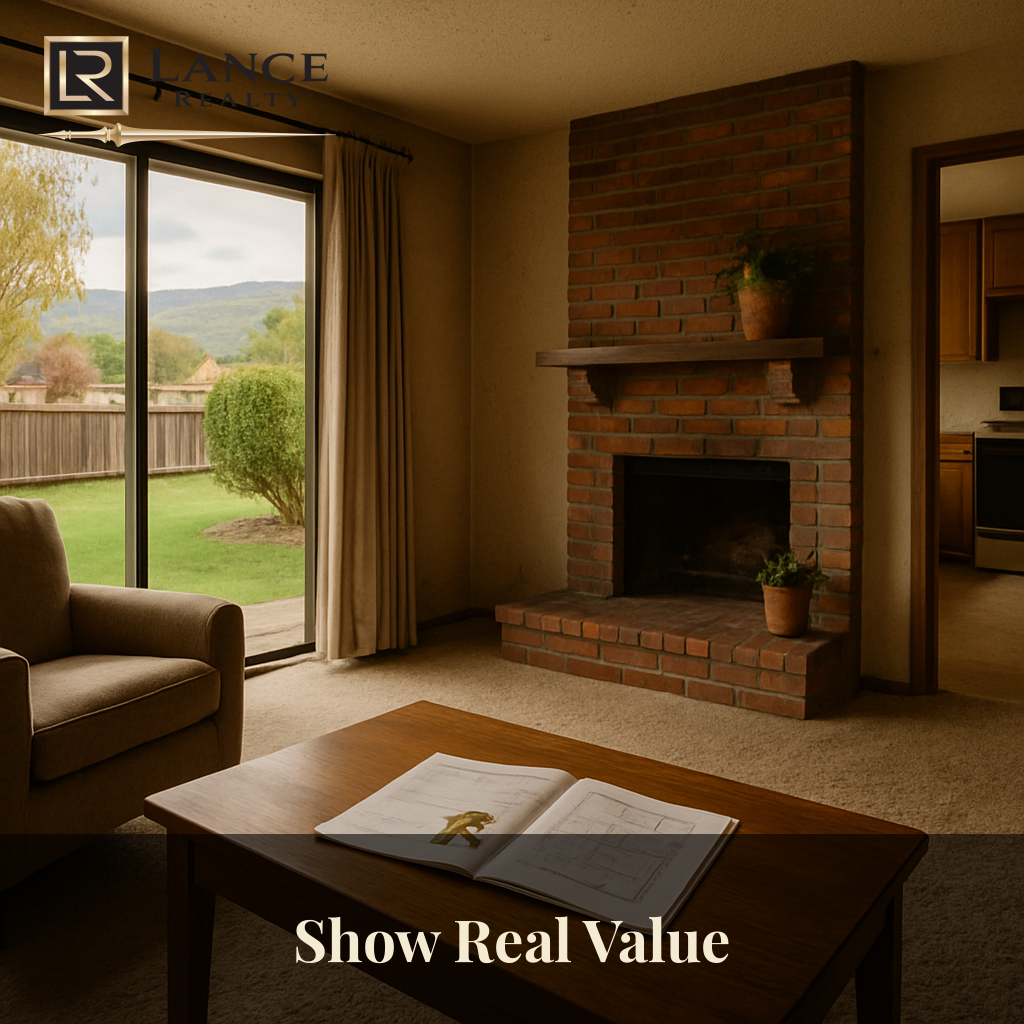
If You're Selling a Fixer-Upper in Eagle, Here's What Buyers Are Really Looking At
Selling a Home That Needs Work in Eagle Isn't a Weakness, It's a Positioning Decision
If you're thinking about selling a home in Eagle that needs some work, you're not starting from behind. You're just starting with different information. And in a market where the median sold price hit $952,500 in September 2026 and homes averaged 45 cumulative days on market, positioning a fixer-upper the right way can absolutely get you a strong result.
But here's the reality. Buyers looking at homes that need work are doing their homework differently than buyers looking at move-in-ready homes. They're calculating. They're budgeting. They're often bringing a contractor or inspector with them on the first showing. And they will find the issues whether you disclose them or not.
So if you're planning to list a fixer, the question isn't whether you should hide the flaws. The question is how you use those flaws to set honest expectations, price strategically, and attract the right kind of buyer from the start.
Buyers Will Insist on a Thorough Inspection, So You Might as Well Know What They'll Find First
Here's what I tell every seller with a fixer-upper in Eagle. Don't list your home without getting your own inspection first. That sounds backwards to a lot of sellers, but it's one of the smartest moves you can make.
When you list a home that visibly needs work, serious buyers assume there are also invisible issues. And they're going to pay for a full inspection, maybe even bring a structural engineer or HVAC specialist. That means you're going to get a repair list no matter what. The only question is whether you see it before you set your price or after you've already accepted an offer.
If you wait until the buyer's inspection to find out your roof has three layers and the crawl space has drainage problems, you're negotiating from a position of surprise. If you already know that before you list, you can price accordingly, disclose honestly, and attract buyers who expect those issues and have already budgeted for them.
A pre-listing inspection gives you control. It lets you say, "Here's what we know. Here's what we've priced for. And here's the opportunity you're getting." That's a much stronger position than, "We didn't realize that. Let's renegotiate."
Buyers Are Budgeting for Renovations, So Your Price Needs to Reflect That Reality
In September 2026, Eagle's median list price was $976,000. But if your home needs $80,000 in foundation work, roof replacement, and HVAC updates, a buyer isn't going to offer you $976,000 and then spend $80,000 on top of that. They're working backwards from what the renovated home will be worth, and they need enough margin left over to make the project worthwhile.
That's not a buyer trying to lowball you. That's a buyer being realistic about what they can afford to put into a property that still needs work. And if you price your fixer like it's already updated, you're going to sit on the market while buyers walk through, take notes, and move on.
Here's the approach that works. Start with what comparable homes in your area are selling for in move-in-ready condition. Then subtract the actual cost of repairs, plus a margin for the time, effort, and risk the buyer is taking on. That margin isn't negotiable, it's the reason they're considering a fixer in the first place.
If you're not sure what that number looks like, Eagle's average sold price in September was $1,180,242, but homes needing significant work are obviously going to land well below that. The key is knowing exactly where your home fits and pricing it there from day one.
Highlighting Genuine Value-Add Potential Matters More Than Hiding Flaws
Buyers looking at fixers aren't looking for perfection. They're looking for potential. And that means your job as the seller isn't to cover up problems, it's to show what the home could become in the right hands.
Let's say your Eagle home sits on a half-acre lot in Shadowbluff or Stags Crossing, backs to open space, and has great bones but outdated finishes and deferred maintenance. That's not a liability if you market it right. That's an opportunity for a buyer who wants space, privacy, and the chance to build equity through smart renovations.
The buyers you want are the ones who can see past the carpet and countertops. They're looking at square footage, lot size, location, layout, natural light, and whether the foundation and framing are solid. If those fundamentals are strong, your listing should lead with that, not apologize for the cosmetic stuff.
I've worked with sellers who tried to stage around obvious problems, and it never works. Buyers aren't fooled by fresh paint over water stains or a strategically placed rug over damaged flooring. What does work is honest disclosure, clear photos that show the home as it is, and marketing that says, "Here's the opportunity. Here's the upside. Here's what it could be worth when you're done."
That approach attracts buyers who are prepared, not surprised. And those are the buyers who close. What Buyers Really See When They Look Up Your Star Neighborhood (And Why That Matters More Than Your Kitchen) applies here too, buyers are evaluating the whole picture, and location still matters even when the house needs work.
What Buyers Aren't Looking For in a Fixer
Just as important as knowing what buyers want is knowing what they don't. Buyers looking at fixers in Eagle aren't interested in homes where the core systems are failing and the cost to fix them exceeds the value of the property. They're not looking for foundation issues that can't be solved without tearing the house down. And they're not looking for homes in subdivisions where every other property is updated and theirs would be the last one standing.
If your home has major structural problems, it might make more sense to sell to an investor than to market it to a traditional buyer. That's not a failure, it's just a different strategy. And knowing which path makes sense for your situation is part of what a good agent helps you figure out before you list.
The other thing buyers aren't looking for is a seller who's defensive about the condition of the home. If you're constantly explaining why things are the way they are or justifying why you didn't fix something, buyers sense uncertainty. What they want is a seller who's straightforward, realistic, and willing to price the home for what it is today, not what it was ten years ago.
Here's How I Help Eagle Sellers Position a Fixer-Upper
When I work with a seller who has a home that needs work, the first thing we do is walk the property together. Not a quick tour, a real walkthrough where we identify every issue a buyer is going to notice, question, or negotiate over. Then we decide what's worth fixing and what's not.
Some repairs pay off. Fixing a leaking roof before you list can prevent buyers from asking for a full replacement plus a credit. Other repairs don't move the needle. Replacing carpet in a home that's already priced as a fixer is usually a waste of money, the next owner is ripping it out anyway.
Once we know what we're working with, we price the home based on real data, not emotion. That means looking at recent sales of similar homes in similar condition, adjusting for lot size, location, and updates, and setting a list price that reflects where the market actually is in October 2026, not where you wish it was.
Then we market it honestly. Professional photos that show the home as it is. A description that acknowledges the work needed but highlights the real strengths, location, layout, lot, bones. And a strategy that attracts buyers who are actively looking for a project, not buyers who are going to be shocked when they walk in.
That's what The Seller's Edge system is built for. It's a process that helps sellers prepare, position, and market their home with a clear plan, whether it's move-in-ready or needs significant work.
The Market Has Room for Fixers, But Only If They're Priced Right
In September 2026, Eagle had 400 active listings and 197 pending sales. That's a market with options. Buyers aren't desperate. They're comparing. And if your fixer is priced like a finished home, they're going to move on to something that makes more sense.
But if you price it right, disclose what you know, and show the real potential, there's absolutely a buyer out there. In fact, with interest rates holding near 7% and new construction in Eagle pushing well above the median, some buyers are specifically looking for homes they can buy below market and improve over time.
Those are your buyers. And your job is to make it easy for them to say yes. That means no surprises, no defensiveness, and no pretending your home is something it's not. Just honest positioning, smart pricing, and a plan that gets you from listing to closing without unnecessary drama.
Have more questions about selling your Eagle home? Visit our Eagle Home Selling FAQ for straight answers on pricing, closing costs, timing, and more.
Barry Lance | Owner/Broker/Realtor® | 208-488-1433 | [email protected] | LanceRealty.com



