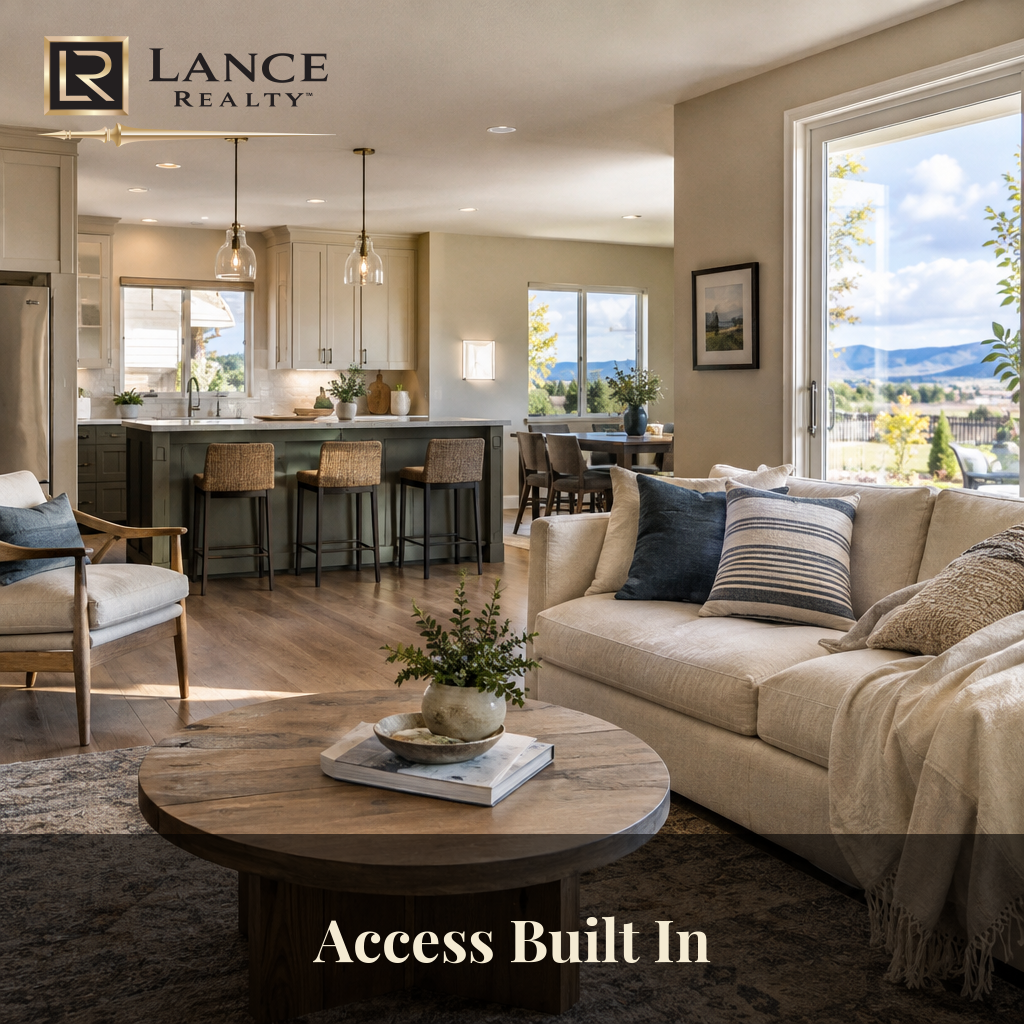
Making Your Caldwell Home Work for You Now and When You Sell: Accessibility That Adds Value
I'm sitting across from a Caldwell seller who made a decision five years ago that just paid off in a way she didn't expect. She widened her hallways and bathroom doorways when her father moved in. No ramp. No big announcement. Just a quiet remodel that made daily life easier for someone who needed it.
Now she's selling. And three of the first five showings were buyers specifically looking for accessible features. One made an offer the same day.
Here's what I want you to understand. Accessibility isn't a niche. It's not a compromise. And in Caldwell's market right now, where the median sold price in September 2026 hit $429,990 and homes averaged 41 cumulative days on market, the homes that work for more people sell faster and hold their value better.
If you're thinking about making your home more accessible, whether for yourself, a family member, or a future buyer, here's what actually matters and what protects your equity when it's time to sell.
Doorways and Hallways: The Foundation That Most People Get Wrong
Let's start with the most common mistake. People install grab bars and call it done. But if your doorways are 28 inches wide, you haven't solved the problem. You've decorated around it.
Standard doorways in most Caldwell homes built before 2010 run 30 to 32 inches. Accessible doorways start at 36 inches. That's the difference between a wheelchair fitting through easily and not fitting at all.
I work with buyers and sellers in neighborhoods like Purple Sage Estates, Timber Hills, and Summerwind at Orchard Hills, and the homes that move fastest aren't always the newest. They're the ones that work. And doorways are where function starts.
If you're remodeling, widening doorways in the primary bedroom, bathroom, and main living areas isn't just smart for today. It's a signal to future buyers that this home was built to last and adapt. Homes in Caldwell sold for an average of $506,427 in September 2026. The ones that work for aging owners, multigenerational families, and buyers with mobility considerations don't sit. They close.
Ramps and Zero-Step Entries: Where to Add Them and Where Not To
Not every home needs a ramp. But if you're adding one, do it right or don't do it at all.
Portable ramps look temporary because they are temporary. And temporary features don't add value. If you're planning to sell within the next few years, a professionally installed ramp with proper slope, railings, and integration into your landscaping is worth considering. If you're not sure, wait.
Zero-step entries are different. A single step from the garage into the house can be eliminated during a remodel without looking like an accessibility feature. It just looks like good design. Same with a flush threshold from a covered patio or side entry. These changes don't announce themselves. They just work.
I see this a lot in areas like Andorra Estates, Aspens, and Pappy's Landing, where buyers want easy access to outdoor space without navigating steps every time they take the dog out or carry in groceries. Eliminating that single step doesn't read as "accessible." It reads as "smart."
Grab Bars in the Right Spots: Bathrooms, Yes, But Not Just Bathrooms
Grab bars get a bad reputation because most people install them wrong. If you bolt a chrome bar to the tile next to your tub and leave everything else untouched, it looks like a retrofit. And retrofits don't add value. They remind buyers something needed fixing.
Here's the better approach. If you're remodeling your primary bathroom, build blocking into the walls during construction so grab bars can be added later without tearing into drywall. Install bars that match your fixtures in finish and style. Put them where they'll actually get used: next to the toilet, inside the shower, near the tub.
And don't stop at the bathroom. A grab bar near the garage entry, along a hallway, or next to exterior steps doesn't look medical. It looks thoughtful. Especially in Caldwell, where we're seeing more buyers in their 50s and 60s who want to stay in their home long-term and aren't interested in moving again in ten years.
If you're preparing your home to sell and grab bars are already installed, leave them unless they're damaged or outdated. Removing them leaves holes. And holes require repair, paint, and explanation.
Walk-In Showers and Curbless Entries: The Remodel That Sells Itself
This is the single most valuable accessibility upgrade you can make. A walk-in shower with a curbless entry, built-in bench, handheld showerhead, and quality tile doesn't read as accessible. It reads as luxury.
I've seen this shift happen in real time. Ten years ago, a curbless shower was a special request. Now it's standard in most new builds and high-end remodels. Buyers don't ask if it's there for accessibility. They ask if it's included in the photos.
In neighborhoods like Syringa Meadows, Topaz Ranch, and Weston Pointe, where homes are hitting the market with updated primary suites and modern finishes, a well-done walk-in shower is expected at certain price points. If your home is listed between $450,000 and $550,000 and still has a tub-shower combo with a standard curb, you're behind.
If you're planning this upgrade, budget for quality tile, proper drainage, and a frameless glass enclosure if it fits your style. This isn't the place to cut costs. A poorly installed curbless shower that leaks or doesn't drain right will cost you more in repairs and buyer confidence than it saves in installation.
Smart Home Features That Make Accessibility Easier Without Looking Like Accessibility
Voice-controlled lights. Touchless faucets. Smart locks. Video doorbells. These aren't accessibility features in the traditional sense. But they make a home easier to live in for anyone with limited mobility, strength, or dexterity.
And here's the bonus. Buyers don't see them as accommodations. They see them as upgrades.
I work with buyers relocating from California who expect smart home features as baseline in anything built after 2015. If your home already has them, call them out. If it doesn't, adding a few strategic pieces during your prep phase can shift how your home presents without requiring structural changes.
For more ideas on staging and preparing your home before listing, check out Maximizing Small Spaces: Smart Staging Ideas for Middleton Homes—a lot of the principles around making features work harder apply here too.
When Accessibility Upgrades Don't Add Value and What to Do Instead
Not every modification makes sense if you're planning to sell. Chair lifts, for example, are deeply personal and rarely transfer value. Same with hospital-style rails, institutional finishes, or anything that signals medical necessity rather than thoughtful design.
If you've made those changes and they serve you well, keep them as long as you need them. But when it's time to sell, have a conversation with your agent about what stays and what goes. Some features protect your equity by staying in place. Others protect it by coming out before photos.
My job is to help you see the full picture before you make a move. Not every accessible home needs to announce itself. The best ones don't. They just work. And the buyers who need those features recognize the value immediately. The ones who don't see quality, function, and smart design.
Right now in October 2026, Caldwell's market is giving sellers a little more time than it did back in April, when homes were averaging just 41 cumulative days on market. September's average climbed slightly to 41 days countywide. That's not a slowdown. That's a return to normal. And in a normal market, the homes that stand out are the ones that work for the widest range of buyers without compromising style or value.
What Caldwell Buyers Actually Want Right Now
I can tell you what's moving. Homes in Bella Toscana, Heritage Meadows, and Shadow Glen with updated primary suites, functional layouts, and easy main-floor living are still getting multiple showings within the first week. The difference between June and now isn't demand. It's patience. Buyers are taking an extra week to decide. They're asking more questions. They're comparing three homes instead of two.
But the homes that check the right boxes aren't sitting long. Especially the ones priced right from day one. In September 2026, Caldwell's median list price sat at $453,008 while the median sold price came in at $429,990. That gap tells you everything. Overpricing still kills momentum. Accurate pricing still wins.
If your home has accessibility features that were done right, they're part of your value story. If you're thinking about adding them, talk to someone who understands how they'll play when it's time to sell. Not all upgrades add the same value. And not all value shows up the same way in every market.
Have You Made Accessibility Upgrades That Worked?
I'd like to hear from you. If you've adapted your Caldwell home for accessibility, what worked? What didn't? What would you do differently? Drop a comment or reach out. These conversations matter. And they help other homeowners make smarter decisions before they invest time and money into changes that may or may not pay off.
My promise to every seller I work with is simple. I help you position your home so it competes, connects, and closes without leaving money on the table. That's what The Seller's Edge is built around. Preparation, pricing, marketing, and negotiation with a plan that's specific to your home and your market.
If you're thinking about selling and you want a honest assessment of what your accessibility features are worth and how to position them, let's talk. Not every feature adds value the same way. But the ones that do can make a real difference in how fast your home sells and how much you walk away with.
Have more questions about selling your Caldwell home? Visit our Caldwell Home Selling FAQ for straight answers on pricing, closing costs, timing, and more.
Barry Lance | Owner/Broker/Realtor® | 208-488-1433 | [email protected] | LanceRealty.com