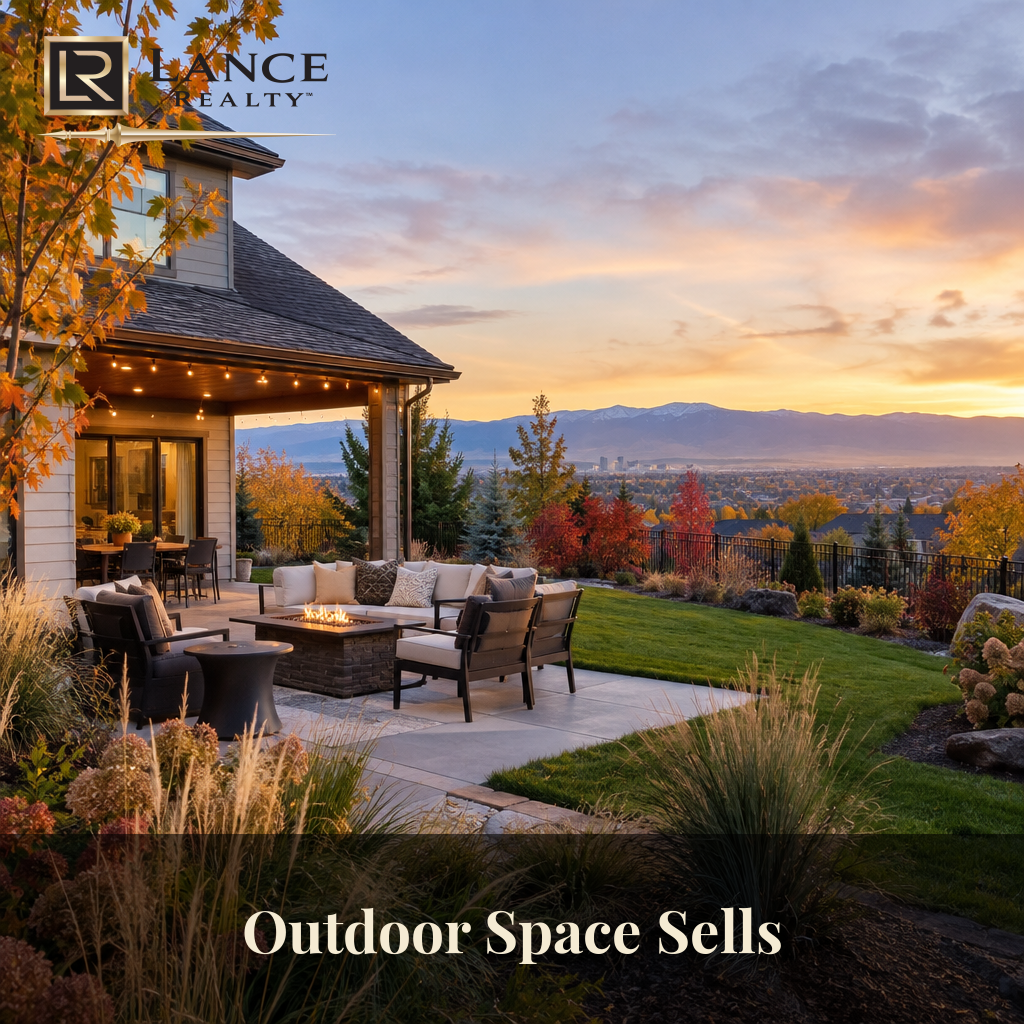
Outdoor Entertaining Spaces: Why They Matter When You Sell Your Boise Home
I'm writing this from my desk in October 2026, and we're right in that sweet spot where Boise weather is still mild enough to imagine yourself outside with a jacket and a cup of coffee. Buyers are still thinking about summer. That's important, because your outdoor space isn't just a bonus feature anymore. It's part of the story buyers are telling themselves before they even walk through your front door.
In September 2026, Boise homes spent an average of 33 cumulative days on market. That's up from 30 days back in August, and it means buyers are taking their time. They're comparing homes harder than they did in spring when the average was 20 days in May. When buyers slow down and look closer, the details start to matter more. Your backyard is one of those details.
Here's what I'd be looking at if I were you. Buyers aren't asking whether you have a backyard. They're asking whether they can see themselves using it. There's a difference.
Clear Zones That Tell a Story
The first thing that separates a memorable outdoor space from a forgettable one is clarity. Buyers need to understand what they're looking at. If your backyard feels like one big open rectangle of grass with a couple chairs pushed against the fence, they'll move on. If it feels like three defined spaces with clear purposes, they'll slow down and imagine themselves there.
I'm not saying you need a full landscape redesign. I'm saying you need to designate zones. A dining area. A lounging area. Maybe a fire pit circle or a water feature corner if you've got one. The goal is to show how much living you can do back there without making it feel cramped.
In Boise right now, where the median sold price hit $530,000 in September 2026, buyers are paying attention to usable square footage, and that includes outdoor square footage. Across Ada County, the average sold price was $716,668 and homes averaged 38 cumulative days on market. Boise's 33 days tells me it's slightly faster, but not by much. Buyers still have time to compare, and outdoor space is one of the first things they'll use to separate your home from the next one.
Outdoor Lighting That Extends the Day
Most sellers stop thinking about their backyard once the sun goes down. That's a mistake. Outdoor lighting is one of the easiest ways to make a buyer think your home feels bigger and more expensive than it actually is.
You don't need a stadium setup. You need intentional lighting that extends the living space into the evening. String lights over a dining table. Low-voltage path lights that lead from the patio to a fire pit. Maybe an uplighting fixture that highlights a tree or a fence corner. The idea is to create depth and warmth after dark.
When I help sellers prepare their homes, this is one of the first things we talk about. Buyers tour homes in the evening all the time, especially during fall and winter when daylight is shorter. If your backyard goes completely dark, they're not going to imagine themselves out there. If it's lit thoughtfully, they're going to see it as a second living room.
This isn't about showing off. It's about creating an emotional response. Buyers remember homes that feel warm and intentional, and outdoor lighting is one of the fastest ways to get there.
Fire Pits and Water Features Buyers Remember
Not every outdoor space needs a fire pit or a water feature, but if you have one, make sure it's working and visible. These are the kinds of features buyers mention when they're talking to their spouse in the car on the way home. "Did you see the little fountain near the back fence?" or "I liked that fire pit setup by the patio."
Fire pits work because they create a focal point and they suggest year-round use. In Boise, where we get cold nights but not brutal winters, a fire pit tells buyers they can use the space in October, November, even into December. That's value.
Water features work for a different reason. They create sound and movement. A small fountain or a recirculating stream can make a small backyard feel more private and more expensive. The key is scale. A massive waterfall in a quarter-acre lot feels off. A simple bubbling urn or a narrow channel feels intentional.
I'm not telling you to install one of these features if you don't have it. I'm telling you that if you do have it, make it work before you list. Clean the fire pit. Clear the ash. Make sure the water feature is running and the pump isn't making noise. These details separate homes that sell in 33 days from homes that sit longer.
If you're thinking about outdoor prep more broadly, the same intentional mindset applies indoors too. Just like outdoor lighting creates warmth, thoughtful staging inside helps buyers picture themselves in the space. I see this work across the Treasure Valley, from Boise to neighboring cities, where small adjustments lead to faster, cleaner sales. Some of the same principles that work here also apply when sellers are Pet-Friendly Prep That Helps Sell Your Caldwell Home: Small Touches That Work When You Live with Dogs or Cats prepare homes in Caldwell, where buyers notice how you've thought through the details before listing.
What This Looks Like in Boise Right Now
We closed 307 homes in Boise in September 2026. That's slightly down from 326 in August, which tracks with the seasonal slowdown we usually see as we move into fall. Buyers are still active, but they're more selective. Active listings sat at 494 in September, up from 523 in August, which tells me inventory is tightening slightly but competition is still real.
The median list price was $625,000 in September, which means half of the homes for sale were priced above that and half below. If you're thinking about selling in the next few months, outdoor space becomes even more important in a market where buyers have time to compare and inventory is tight enough that every listing still matters.
Pending sales hit 272 in September, down from 309 in August, which reflects the seasonal cooldown. But here's what I want you to notice. Buyers are still writing offers. They're just being more intentional about which homes they choose. And outdoor space, especially a backyard that feels finished and functional, is one of the things they use to decide.
How I'd Approach This If I Were Selling
If I were getting ready to list a Boise home right now, here's what I'd do with the outdoor space. First, I'd walk out back and ask myself whether a buyer can tell what each part of the yard is for. If the answer is no, I'd add definition. A small dining set near the door. A couple chairs and a side table near a tree or a corner. Maybe a rug under the seating to anchor it visually.
Second, I'd add lighting. Even if it's just a string of warm LED bulbs over the patio or a couple solar path lights along a walkway. The goal is to make the space feel intentional after dark.
Third, I'd make sure any existing features are working. Fire pit cleaned out. Water feature running. Planters weeded and mulched. These aren't expensive fixes, but they're the kind of details buyers notice when they're comparing your home to the next one.
And fourth, I'd stage it like I stage the inside. That means removing clutter, keeping furniture proportional to the space, and making sure everything feels like it has a purpose. Buyers don't want to see your storage shed packed with old bikes. They want to see a backyard that feels ready to use.
This is the same approach I bring to sellers through The Seller's Edge, where we talk about positioning every part of your home, not just listing it. Outdoor space is part of that strategy.
Neighborhoods Where This Matters Most
Outdoor space plays differently depending on where you are in Boise. In neighborhoods like Harris Ranch, Hidden Springs, and Dry Creek Ranch, buyers expect a finished backyard because that's part of the community culture. In East Valley or Riverside Village, the expectations might be a little more relaxed, but the principle is the same. Show buyers what they can do with the space, don't make them guess.
In newer areas like Cartwright Ranch or Bonneville Pointe, buyers are often comparing your home to new builds that come with landscaping packages and finished outdoor spaces. If your backyard looks unfinished or undefined, you're giving them a reason to choose the house down the street.
In more established parts of Boise, like The Hickories or Lakewood, buyers might value mature trees and natural privacy more than they value a fancy patio setup. But even there, clarity still matters. Define the space. Add lighting. Make it easy for them to picture themselves using it.
Timing and Market Context
We're heading into winter, but that doesn't mean outdoor space stops mattering. Buyers who tour homes in October, November, and December are still thinking about spring and summer. They're imagining what it will feel like to live in your home six months from now. If your backyard is a mess or it's hard to picture, they're going to assume it's a project they'll have to tackle later.
Right now, with rates holding in the mid-7% range according to both Fannie Mae and the MBA, buyers are being more cautious with their budgets. They're not looking for projects. They're looking for homes that feel move-in ready, inside and out. That's why outdoor space matters more than it did two years ago when buyers were writing offers sight unseen.
The Treasure Valley closed 1,431 homes in September 2026, up nearly 5% from the same month last year, with the median sale price at $514,000 across the region. Boise's higher median of $530,000 reflects the fact that buyers here expect a little more polish, including in the backyard.
What Not to Do
Don't overspend. You don't need a full landscape redesign to make your outdoor space work. You need clarity, lighting, and function. I've seen sellers drop thousands on elaborate hardscaping or new turf right before listing, and it doesn't always move the needle. Buyers care more about whether the space feels usable than whether it's magazine-ready.
Don't leave broken features visible. If your fire pit is rusted out or your fountain hasn't worked in three years, either fix it or remove it. A broken feature tells buyers the home hasn't been maintained, and that impression carries into how they see everything else.
Don't clutter the space. Your backyard isn't storage. Move the bikes, the broken planters, the stack of pavers you've been meaning to use. Buyers need to see the space, not your weekend projects.
How to Think About This as Part of a Bigger Strategy
Outdoor space is just one part of how you position your home to sell. But it's a part that a lot of sellers overlook, and that's where you can create separation. When a buyer walks through three homes in one afternoon and yours is the only one with a backyard that feels finished and functional, you've just given them a reason to write an offer.
My job is to help you see the full picture before you make a move. That includes pricing, timing, marketing, and preparation. Outdoor space fits into the preparation piece, and it's one of the easiest ways to add perceived value without a major investment.
If you're thinking about selling in Boise, let's talk about what your outdoor space says to buyers and whether it's helping or hurting your position. Every detail matters when buyers are taking their time and comparing homes closely.
Have more questions about selling your Boise home? Visit our Boise Home Selling FAQ for straight answers on pricing, closing costs, timing, and more.
Barry Lance | Owner/Broker/Realtor® | 208-488-1433 | [email protected] | LanceRealty.com



