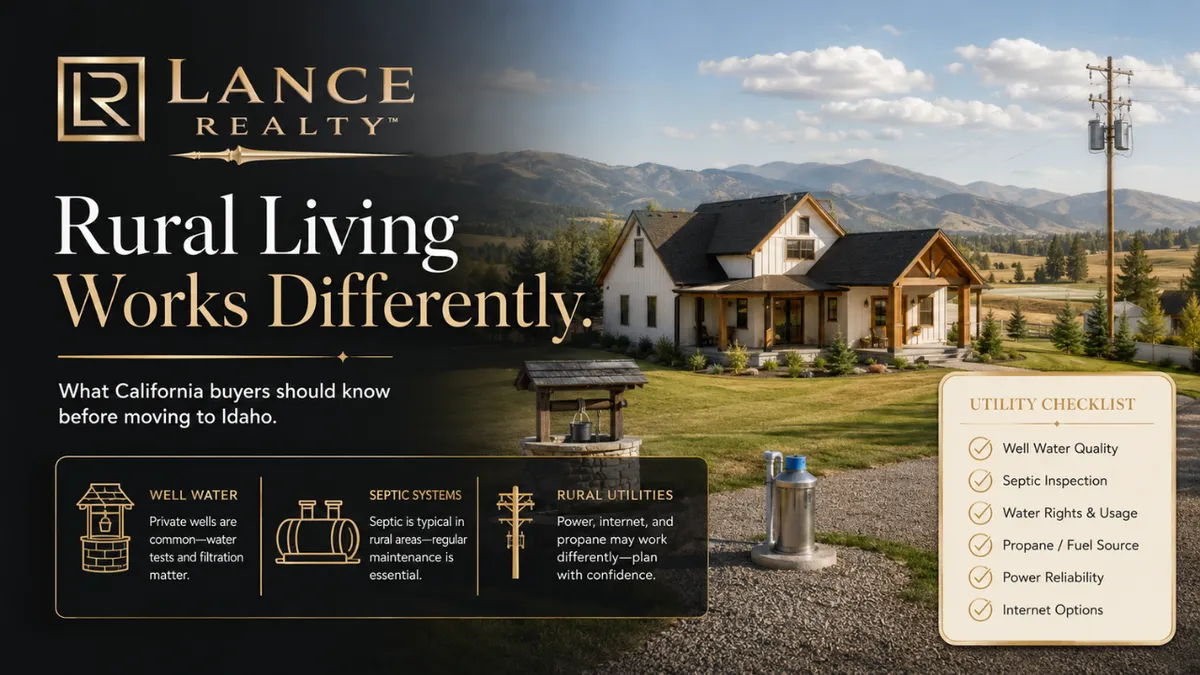
Well Water, Septic, and Rural Utilities: What City-Raised Californians Should Expect Before Moving to Idaho
You're Used to City Water and Sewer. Idaho Might Be Different.
I had a buyer move here from Walnut Creek last spring. Nice family, plenty of equity, excited about the move. They fell in love with a property on the Boise Bench with mountain views and a big yard. Everything looked great until I mentioned the well and septic.
They went quiet. The husband looked at his wife. "We don't know anything about that."
And that's fair. If you grew up in Southern California or the Bay Area, you probably never thought twice about where your water comes from or where it goes. You turn on the tap. You flush the toilet. The city handles the rest.
But when you move to Idaho, especially if you're looking at anything outside the main city centers, you need to understand that well water and septic systems are normal. They're reliable. They work. But they require a different kind of ownership than you're used to.
My job is to make sure you know what you're getting into before you write the offer.
Where You'll Find City Utilities vs. Well and Septic in the Treasure Valley
Let's start with what's typical in each city. In Boise, most properties inside the city limits have city water and sewer. That means you pay a monthly bill and the infrastructure is maintained by the city. Same goes for most of Meridian, Eagle, and Nampa.
But once you get outside those core areas, or if you're looking at acreage properties, older neighborhoods near the foothills, or anything in the county, you're probably looking at well water and septic. Star, Kuna, Middleton, and parts of unincorporated Ada County and Canyon County lean heavily toward wells and septic tanks.
Right now in Boise, median list price is sitting at $639,900 and median sold price is $700,604. You've got 500 active listings and 329 under contract. Days on market are holding at 5. That tells me inventory is tight and buyers are moving fast.
If you're coming from California with $800,000 to spend and you want space, you're going to see properties on wells. You need to know what that means before you fall in love with the listing photos.
What Well Water Actually Means
A well is exactly what it sounds like. There's a hole drilled into the ground on your property, and a pump pulls water up from the aquifer below. It's your water. You own it. You maintain it.
Most wells in the Treasure Valley are shallow wells, between 150 and 400 feet deep. The water quality here is generally excellent. But you're responsible for testing it, treating it if needed, and maintaining the pump and pressure tank.
The pump usually lives in your basement or a utility room. If it fails, you call a well service company. If the power goes out, you don't have water unless you have a generator. If you're used to city water where someone else handles all of this, it feels like a bigger responsibility at first.
But here's what I tell buyers: well water isn't a problem. It's just a different system. Once you understand how it works, it's no more complicated than maintaining your HVAC or your garage door opener.
Before you close, you'll want a well inspection and a water quality test. That's standard in Idaho. We write it into the contract. The inspection checks the flow rate, the pump condition, and the overall system. The water test checks for bacteria, nitrates, and minerals.
If something comes back off, we negotiate a fix or a credit. You don't buy a house with a bad well unless you're prepared to deal with it.
What Septic Actually Means
Septic systems handle your wastewater on-site instead of sending it to a city treatment plant. You've got a tank buried in your yard, and a drain field that filters the water back into the soil.
It works. It's been working in rural America for decades. But you have to maintain it.
That means pumping the tank every three to five years. It means being careful what you flush. It means understanding where your drain field is so you don't drive over it or plant a tree on top of it.
If you're buying a property with septic, we'll include a septic inspection in your due diligence period. The inspector checks the tank, the baffles, the drain field, and the overall condition. If the system is old or failing, we either negotiate a replacement or you walk.
A new septic system can cost $8,000 to $15,000 depending on the size and soil conditions. That's not small. But it's also not common. Most septic systems last 20 to 30 years if they're maintained properly.
Why Some California Buyers Actually Prefer Wells and Septic
I've had plenty of buyers tell me they don't want to deal with a well or septic. And I get it. It's unfamiliar. But I've also had buyers who came here looking for more independence, more land, and less reliance on city infrastructure. For them, a well and septic check the box.
You're not paying a monthly water or sewer bill. You're not subject to rate increases or city conservation mandates. If you're on five acres in Star or Kuna, your water is yours and your system is yours.
That appeals to a certain kind of buyer. If you spent 30 years in the Bay Area dealing with PG&E bills and water restrictions, the idea of owning your own water source starts to sound pretty good.
What About Propane and Other Rural Utilities
If you're looking at a property outside city limits, there's a decent chance it's on propane instead of natural gas. That means you've got a tank on your property, and a company delivers fuel a few times a year.
Propane is common in Idaho. It works fine. You just need to budget for it and understand that your heating costs might be different than what you're used to in California.
Some properties also use electric heat, wood stoves, or pellet stoves as primary or backup heat sources. If you're coming from a place where you set the thermostat and forget about it, this might feel like more work. But for a lot of people, it's part of the lifestyle they wanted when they left California.
How to Know If a Rural Property Is Right for You
Here's the honest answer. If you grew up in the city and you've never maintained anything outside of a dishwasher, a property on a well and septic might feel like more responsibility than you want. And that's fine. You don't have to buy that property.
But if you're moving to Idaho for space, for land, for a slower pace and more control over your environment, then understanding how wells and septic work is part of the learning curve. It's not hard. It's just different.
My job is to help you figure out what fits your lifestyle before you make an offer. If you want city utilities and you don't want to think about any of this, we'll focus on properties in Boise, Meridian, or Eagle city limits. If you want five acres and mountain views, we'll make sure you understand what comes with it.
The Treasure Valley gives you options. You just need to know which option matches your reality.
How This Fits Into Your Move From California
If you're selling a home in California and moving here with $700,000 or $800,000 in equity, you're going to see a lot of properties that offer more space than you ever had in the Bay Area or Southern California. Some of those properties will be on wells and septic.
The question isn't whether those systems work. They do. The question is whether you're ready to take that on, or whether you'd rather stick with city infrastructure and focus your search accordingly.
That's a lifestyle decision, not a real estate decision. And it's one we talk through before you ever get on a plane to come look at houses.
Because my job isn't to sell you a house. My job is to help you land in the right community with a clear plan. And that means understanding what you're buying, how it works, and whether it fits the life you're trying to build here.
Planning a move from California to Idaho? Visit our California to Idaho Relocation FAQ for straight answers on costs, cities, taxes, and the ListBuySave plan.
Barry Lance | Owner/Broker/Realtor® | 208-488-1433 | [email protected] | LanceRealty.com



