What California Homeowners Should Know About Gardening in Idaho's Climate
Your California Green Thumb Doesn't Translate
I talk to a lot of California buyers who've closed on their Treasure Valley home, moved in during summer, and spent the fall planning their yard. Then winter hits. Then spring takes forever to show up. Then they realize their landscape plan was written for a climate that doesn't exist here.
This isn't the Bay Area. It isn't Southern California. We get real winters. We get late frosts in May. We get 100-degree July afternoons followed by cool nights. And the soil? Heavy clay in most of the valley. Not the sandy loam or coastal dirt you might be used to.
If you're planning a move to Idaho, understanding what grows here and what doesn't is part of landing well. It's not just about the house. It's about making the yard work without fighting the climate every season.
The Growing Season Is Shorter Than You Think
California has spoiled you. Depending on where you lived, you could garden year-round or close to it. Here in the Treasure Valley, your last frost is usually mid-May. Your first frost can hit in late September or early October.
That gives you about four and a half months of reliable growing weather. You can stretch it with row covers or cold frames, but the window is real. If you're used to planting tomatoes in March and harvesting into November, you'll need to adjust.
The upside? We get more sunlight in summer. Long days mean plants grow fast once they get going. But you can't start early, and you can't push late without protection.
I've had clients move here in June, plant a garden in July, and wonder why nothing produced before the first freeze. Timing matters. If you're serious about growing food, plan to start seeds indoors in March or buy starts in May. Don't wait until the soil feels warm. It won't feel warm until it's almost too late.
Soil and Water: Two Big Differences
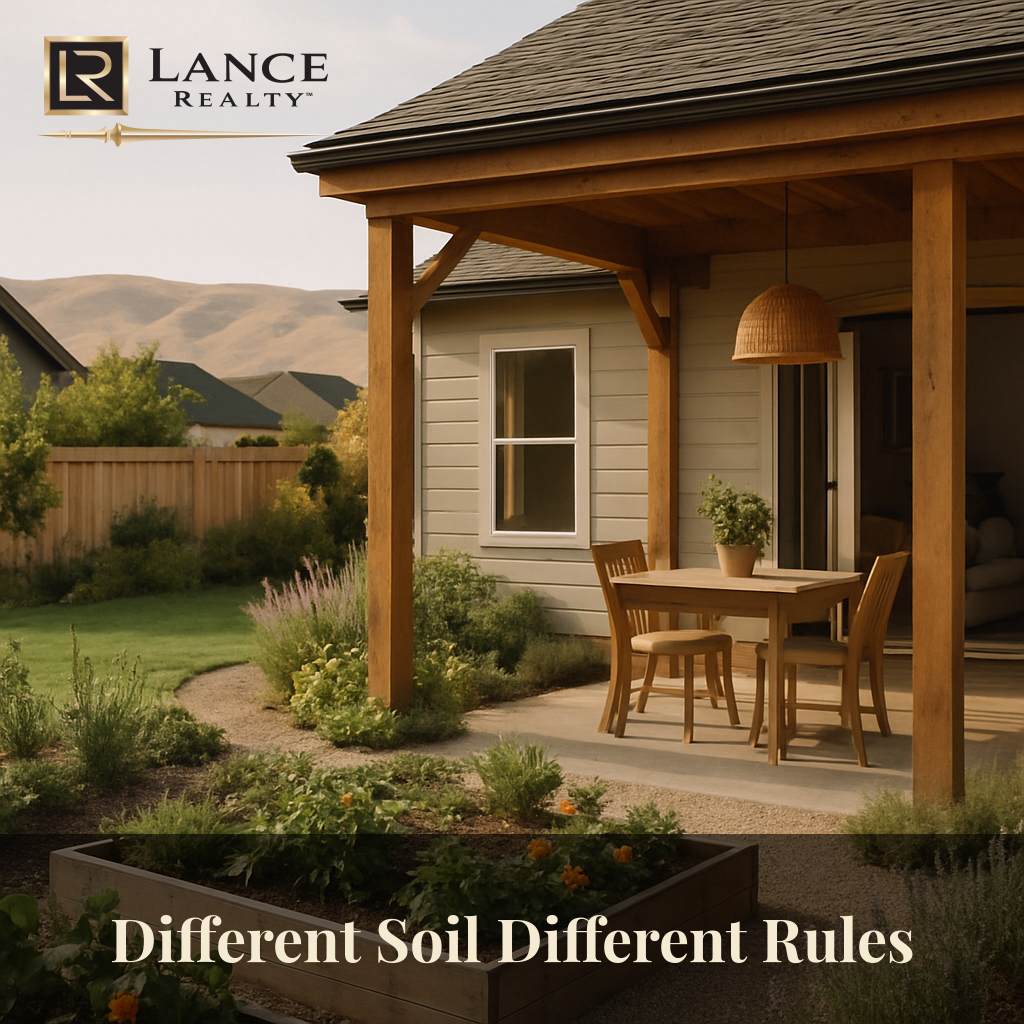
Most of the Treasure Valley sits on clay. Heavy, sticky, slow-draining clay. If you dig a hole and it holds water like a bucket, that's what you're working with. It's not bad soil, but it's not forgiving either.
Clay compacts easily. It cracks when it dries. It's slow to warm up in spring and slow to drain in wet weather. If you want to grow anything beyond native grasses and weeds, you'll need to amend it. Compost, aged manure, and organic matter help break it up. You're not fixing it in one season. You're improving it over time.
Water is the other surprise. California taught you to conserve. Idaho has more water, but it's still the high desert. We average about 12 inches of precipitation a year in the valley. Most of that falls between November and May. Summer is dry.
If you don't water, your yard turns brown by July. If you overwater clay soil, you drown the roots. The balance takes practice. Drip irrigation works well here. So does mulch. Both help you use water efficiently without babysitting the sprinklers every day.
What Actually Grows Here
Forget the plants that thrived in your California yard unless they're cold-hardy and adapted to temperature swings. Here's what works in the Treasure Valley without a fight.
Trees: aspens, maples, honeylocust, hawthorn, crabapple, ornamental pear. All handle cold winters and hot summers. Fruit trees do well if you choose varieties bred for cold climates. Apples, cherries, apricots, and pears all grow here. Peaches are hit or miss depending on late frosts.
Shrubs: lilacs, potentilla, ninebark, spirea, barberry. These are low-maintenance, drought-tolerant once established, and they bloom or provide color without much input. Roses grow here but need winter protection and consistent water.
Perennials: daylilies, coneflowers, black-eyed Susans, yarrow, Russian sage, lavender. All come back year after year and handle our extremes. Lavender especially loves the dry summers and well-drained spots.
Vegetables: tomatoes, peppers, squash, beans, cucumbers, lettuce, kale, carrots, onions, potatoes. Start warm-season crops indoors or buy starts. Direct-seed cool-season crops like lettuce and kale in early spring or late summer for a fall harvest.
What doesn't work: tropicals, citrus, avocados, anything that can't handle a hard freeze. If it needs year-round warmth or mild winters, it won't survive here.
Curb Appeal That Holds Up Through Real Seasons
California landscaping leans green and lush year-round. Idaho landscaping has to look good in every season, including the four months when everything is dormant or covered in snow.
Layered planting works. Mix evergreens for winter structure, deciduous shrubs for seasonal color, perennials for summer bloom, and groundcovers to fill space and suppress weeds. Don't rely on annuals to carry the show. They're expensive, short-lived, and they disappear after the first frost.
If you're buying in Eagle, Meridian, or Boise and you care about curb appeal, look at how the yard is designed. Does it have bones? Does it have evergreens or just a lawn and a few struggling shrubs? A well-designed yard here uses plants that perform in all four seasons, not just June through August.
Mulch matters more here than it did in California. It moderates soil temperature, conserves moisture, and keeps clay from turning into concrete in summer. Wood chips or shredded bark work. Lay it thick, three inches minimum, and refresh it every couple years.
Watering Systems and Maintenance Reality
Most Treasure Valley homes built in the last 20 years have sprinkler systems. Older homes might not. If you're comparing properties in Nampa, Caldwell, or Kuna, check whether irrigation is already in place. Adding it later costs a few thousand dollars depending on yard size.
Sprinkler systems here run on timers, and most people set them for early morning to reduce evaporation. You'll run them two or three times a week in summer depending on your soil and what you're growing. Clay holds moisture longer than sand, so you can stretch the intervals if you're paying attention.
If the home you're buying has mature trees and established landscaping, that's a head start. If it's new construction with sod and a few sticks, plan to invest time and money into building a yard that works. Sod needs consistent water for the first year. Trees and shrubs take three years to establish. Don't expect instant results.
Learning as You Go
I hear from clients a year or two after they move, and gardening always comes up. What survived the winter. What died. What they planted that took off. What they're trying next year.
Nobody gets it right the first season. The clients who do best are the ones who start small, pay attention to what works, and adjust. They talk to neighbors. They visit local nurseries. They don't try to recreate the yard they left behind in California.
Gardening here rewards patience and observation. The soil improves if you work with it. The plants thrive if you choose the right ones. The yard becomes something you're proud of, not something you're fighting.
Finding the Right Fit for Your Lifestyle
Some California buyers want acreage and room to garden seriously. Others want low-maintenance landscaping and more time to explore Idaho. Both are valid. The key is knowing which one you are before you buy.
If you want space to grow food, raise chickens, or landscape on a larger scale, look at Star, Kuna, or parts of Nampa and Caldwell where lot sizes run a quarter acre or more. If you want a smaller yard with less upkeep, newer neighborhoods in Meridian or Eagle often come with HOA-maintained common areas and professionally designed front yards.
Your yard is part of your lifestyle decision, not just a feature of the house. I help buyers think through what they actually want to do with outdoor space, not just what looks good in photos.
Planning a move from California to Idaho? Visit our California to Idaho Relocation FAQ for straight answers on costs, cities, taxes, and the ListBuySave plan.
Barry Lance | Owner/Broker/Realtor® | 208-488-1433 | [email protected] | LanceRealty.com



