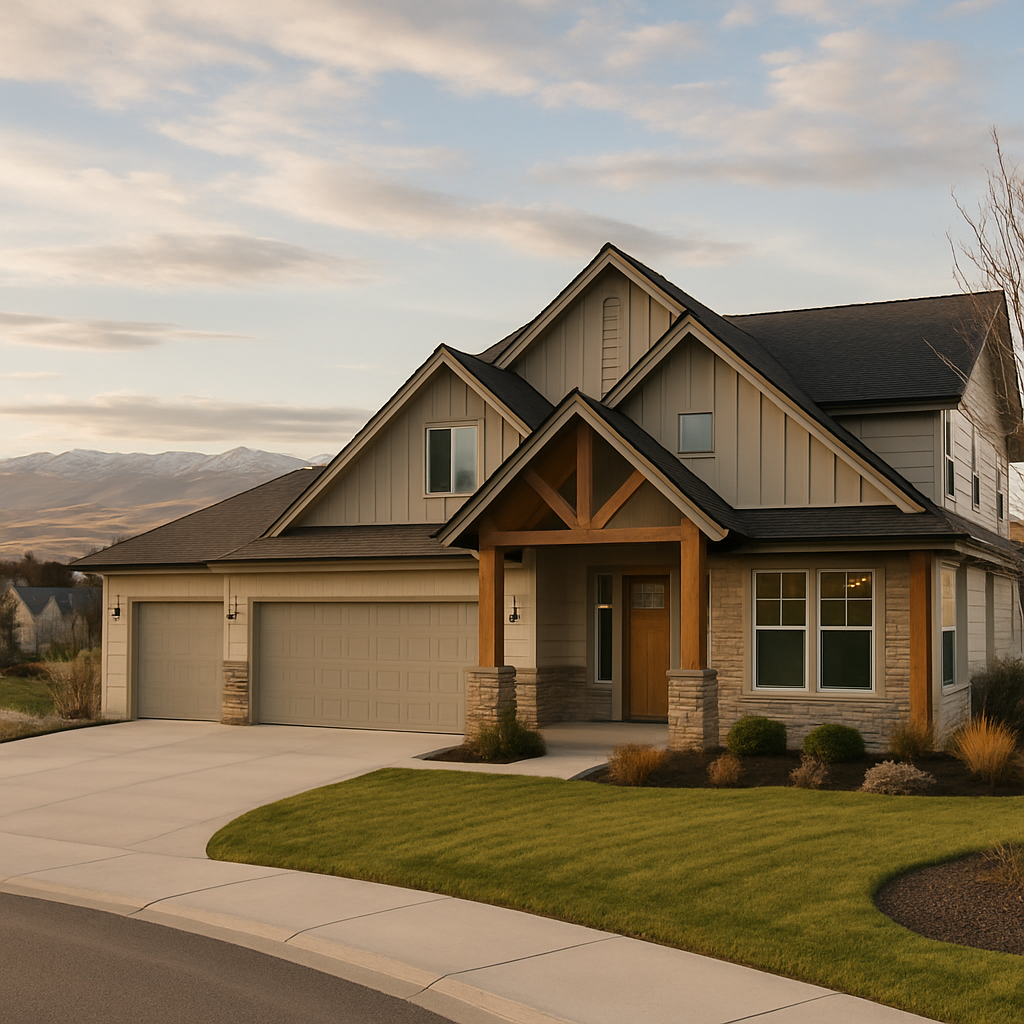
What Long-Time Idahoans Wish California Newcomers Understood Before Moving to Eagle
They Know You're Coming. That's Not the Issue.
Long-time Idahoans aren't mad that you're moving here. Most of them moved here from somewhere else too, or their parents did. What frustrates them is when someone shows up expecting Idaho to be California with cheaper real estate and better views.
It isn't.
Eagle is a great example. It's one of the most desirable cities in the Treasure Valley. Quiet, well-planned, family-focused, great schools. And more expensive than Nampa, Kuna, or Middleton. But it's not Walnut Creek. It's not Danville. It's Eagle, Idaho. And if you show up expecting suburban California with a mountain backdrop, you're going to be disappointed.
I've worked with buyers from Contra Costa County who moved to Eagle and absolutely loved it. And I've worked with buyers who struggled because they didn't understand what they were walking into. The difference wasn't the city. It was expectations.
Let's Talk About What Eagle Actually Is
Eagle sits northwest of Boise, bordered by the Boise River to the south and farmland and foothills to the north. It's built around State Street, which runs east to west and connects Eagle to Meridian and Boise. The city is mostly residential with pockets of retail and a strong emphasis on parks, trails, and open space.
The median home price in Eagle hovers near $640,000 as of late summer 2026. That's higher than Boise, Meridian, and significantly higher than Nampa or Caldwell. For a California buyer coming in with $800,000 to $1 million in equity from the sale of a Bay Area or Sacramento-area home, Eagle often feels like a natural landing spot. You get more space, newer construction options, good schools, and a quieter pace without sacrificing accessibility.
But you're not getting California infrastructure. You're not getting the restaurant density, the walkable downtown core, or the evening commute traffic you're used to. And that's exactly what most people who choose Eagle are looking for.
What Locals Wish You Understood Before You Got Here
Here's what I hear from long-time Idaho residents, both in Eagle and across the valley. These aren't complaints. They're just the truth.
Winter driving is not optional. If you're moving from the Bay Area or Southern California, you've probably never driven in snow. In Eagle, you will. State Street gets plowed. Your neighborhood street might not get plowed until the next day. You'll need to learn how to drive in it, or you'll need to stay home until it melts. Four-wheel drive helps. All-season or winter tires help more. But the biggest factor is just knowing how to slow down and not panic when your car slides a little.
The pace is slower, and that includes service. Restaurants close earlier. Stores have shorter hours. Your Amazon delivery might take an extra day. If you need something obscure, you might have to drive to Boise or order it online. That's not a bug. It's a feature. People here value balance over convenience. If that sounds frustrating, Eagle might not be your fit.
Community matters here. In California, especially in larger metro areas, you can live in a neighborhood for years and never meet your neighbors. In Eagle, that's harder to pull off. People say hello. They wave when you drive by. They'll ask if you need help unloading your truck. If that sounds intrusive, you're going to have a rough adjustment. If it sounds refreshing, you're going to love it.
Your equity goes further, but your income might not. A $700,000 home in Eagle will give you 2,800 to 3,200 square feet, a two- or three-car garage, and a yard. That same money in Contra Costa County gets you a 1,600-square-foot townhouse with no yard and shared walls. But salaries in Idaho are lower. If you're retired or working remotely for a California-based company, that's not an issue. If you're planning to find local work, your income will probably drop 20 to 30 percent. Make sure your budget accounts for that.
You're going to hear about Californians a lot. And not always in a flattering way. Here's the thing. Most locals don't actually care where you're from. What they care about is whether you show up with an attitude that says "this is how we did it in California" or whether you show up ready to learn how things work here. Be the second person.
How Eagle Compares to the Rest of the Treasure Valley
If you're comparing Eagle to Boise, Meridian, Star, or Nampa, here's how I'd break it down.
Eagle is quieter and more residential than Boise. You won't find the downtown energy, the restaurant scene, or the walkable urban core. But you also won't find the traffic, the density, or the faster pace. If you want suburban calm with good schools and easy access to outdoor recreation, Eagle works.
Meridian is bigger, more developed, and slightly more affordable. It has more retail, more dining options, and a broader range of housingstock. If you want convenience and options, Meridian might be a better fit than Eagle. But Eagle feels more spacious and less crowded.
Star sits west of Eagle and feels more rural. Smaller population, larger lots, fewer amenities. If you're coming from a Bay Area suburb and you want even more space and quiet, Star might appeal to you. But you'll drive more for groceries, schools, and entertainment.
Nampa and Caldwell are more affordable and more diverse, with older housing stock and a grittier, more working-class feel. If your budget is $450,000 or less, those cities open up more options. But they don't have the same newer-development appeal or school ratings that draw buyers to Eagle.
Timing Your Move from California to Eagle
It's late August 2026. Mortgage rates are sitting near 6.66 percent according to the latest Freddie Mac data, and Fannie Mae just revised its full-year forecast upward to 6.5 percent for 2026 and 6.7 percent for 2027. That's higher than most buyers hoped for at the start of the year, and it's driven largely by inflation pressures tied to geopolitical conflict.
The Boise metro median home value is near $485,649 according to Zillow, up about 0.9 percent year-over-year. Inventory has improved to a 2.4-month supply, which is better than the pandemic lows but still below the 5 to 6 months considered balanced. NAR's chief economist Lawrence Yun noted that buyers remain extremely sensitive to even small swings in mortgage rates, with every uptick pulling a slice of demand out of the market.
What does that mean for you if you're selling in California and buying in Eagle?
You're in a better position than you were two years ago. Inventory is up. Competition is down. You have more time to look and more leverage to negotiate. But you're not in a buyer's market. Homes in Eagle still move. Days on market vary by price point and condition, but well-priced homes still go under contract in two to three weeks.
If you're planning to move in the next six to nine months, now is the time to start your prep. Not the week before you list your California home. Not after you've already accepted an offer. Now.
The Idaho Buying Process Is Different
California buyers are used to a process that's heavily regulated, attorney-driven in some cases, and packed with disclosure requirements. Idaho is more streamlined. Fewer forms. Faster timelines. And a lot more trust placed in the buyer to do their own due diligence.
You'll work with a buyer's agent who represents your interests. You'll submit an offer that includes your earnest money deposit, your financing terms, and your proposed closing timeline. Sellers in Idaho expect serious buyers to move quickly and honor their commitments. If you go under contract and then try to renegotiate after inspection without a legitimate reason, you'll lose credibility fast.
The inspection period is typically seven to ten days. During that time, you'll hire a home inspector, review the report, and decide whether to proceed, request repairs, or walk away. If you walk during the inspection period, you get your earnest money back. If you walk after that without a legitimate contract contingency, you don't.
Most transactions close in 30 days or less. If you're selling in California and buying in Idaho, you'll need to coordinate those timelines carefully. That's where ListBuySave helps. It's a plan, not a product. And it keeps you from getting stuck in temporary housing or having to close on your Idaho home before your California home sells.
What You Should Do Before You Move
Don't visit Eagle once, fall in love with a house, and make an offer. Spend time here. Drive the neighborhoods. Go to the grocery store. Sit in traffic on State Street during the evening commute. Walk the trails along the Boise River. Talk to people who live here.
Visit in winter if you can. August in Eagle is beautiful. January is a different story. If you've never lived in a place where it snows, you need to know what that feels like before you commit.
Work with an agent who knows both markets. I've been licensed in California and Idaho for more than 24 years. I know what you're leaving. I know what you're walking into. And I'll tell you the truth even when it's not the easiest answer.
Moving from California to Idaho isn't just about finding a house. It's about landing in the right community with a clear plan. Eagle might be that place. Or it might be Meridian, Boise, Star, or Nampa. My job is to help you figure that out before you make the move, not after.
Planning a move from California to Idaho? Visit our California to Idaho Relocation FAQ for straight answers on costs, cities, taxes, and the ListBuySave plan.
Barry Lance | Owner/Broker/Realtor® | 208-488-1433 | [email protected] | LanceRealty.com



