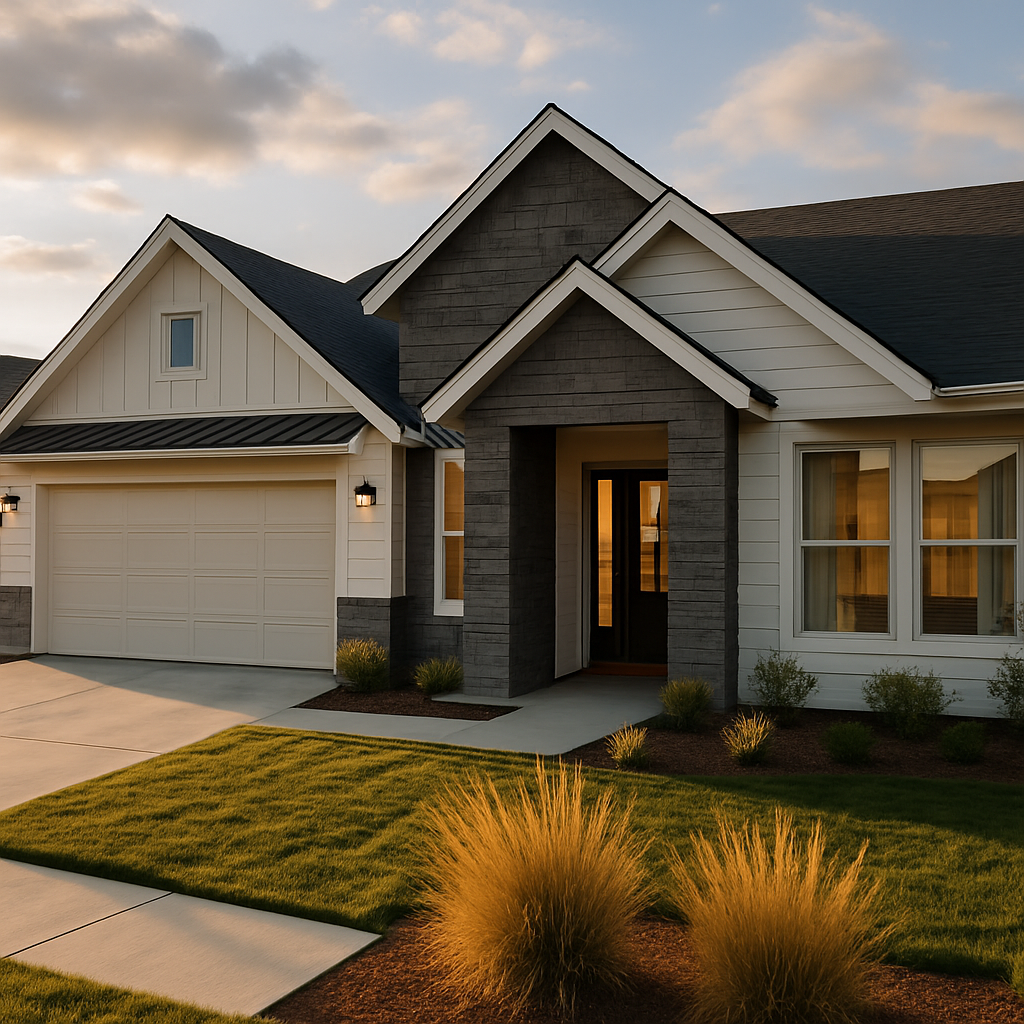
What NOT to Fix Before Selling Your Star Home: Where to Spend, Where to Save, and What Buyers Actually Care About
I get asked this question constantly: "Barry, what should I fix before I list my home?" And here's what I tell every seller in Star. Not everything needs to be fixed. Some repairs protect your price. Some have zero impact. And some actually make buyers wonder what else you're hiding.
The goal isn't to make your home perfect. The goal is to position it so buyers see value, trust what they're buying, and don't have an excuse to lowball you. That's the whole point of The Seller's Edge: you want to control the narrative before the buyer's inspector does.
Here's what I'd be looking at if I were in your shoes, selling in Star this summer.
What You Should Fix: The Stuff That Actually Protects Your Price
There are a handful of things that, if left alone, give buyers leverage to negotiate hard or walk away entirely. These aren't optional. They're defensive moves that protect your equity.
First: anything broken or obviously deferred. Buyers touring homes in Seneca Springs or Cranefield aren't comparing your house to a fixer-upper. They're comparing it to the new construction going up in Norterra and Heirloom Ridge. If your sprinkler system doesn't work, your garage door sticks, or your dishwasher leaks, fix it. You'll pay $300 now or give up $3,000 at closing when the buyer demands a credit.
Second: safety and code issues. Loose railings, missing GFCI outlets in wet areas, non-functioning smoke detectors. Buyers in Star care about quality of life and they expect homes to be well-maintained. A home inspector will flag every one of these, and suddenly your well-kept four-bedroom feels like a liability.
Third: anything that screams "deferred maintenance." Peeling exterior paint, cracked caulk around windows, gutters pulling away from the fascia. None of these are expensive to address, but all of them send the same message: this seller didn't take care of the house. And if they didn't take care of what's visible, what didn't they take care of that I can't see?
In July 2026, Star homes sold for a median price of $645,000 with a median time on market of just 14 days. Homes that show well and don't give buyers a reason to hesitate are moving fast. Homes that look neglected sit longer, and that costs you money every single week.
What You Can Skip: Repairs That Don't Move the Needle
Now let's talk about what you don't need to fix. This is where sellers waste money trying to chase perfection instead of protecting value.
Don't replace perfectly functional but slightly dated finishes. If your kitchen cabinets are from 2010 and they're clean, solid, and neutral, leave them alone. Buyers shopping in neighborhoods like Stonecrest or Paint Point aren't expecting a brand-new kitchen at this price point. They're expecting a well-maintained home they can personalize over time. Spending $15,000 on new cabinets won't get you $15,000 more at closing, and it won't make your home sell faster.
Don't repaint every room in trendy colors. Fresh paint is cheap and smart if your walls are scuffed or dark. But if your interior is already neutral and clean, don't spend the money. Buyers can paint. What they can't do is fix structural problems or replace a roof. Save your cash for the things that actually matter.
Don't replace carpet unless it's stained or worn through. If it's clean and neutral, it's fine. Buyers know carpet is a $2,000 item they can swap out after closing if they want hardwood or luxury vinyl. They don't expect you to do it for them, and they won't pay extra if you do.
And here's the big one: don't over-improve for your neighborhood. If you're selling in Roselands or Hope Springs and every comparable home around you has laminate counters and builder-grade fixtures, don't drop $30,000 on quartz and custom tile. You won't get it back. Buyers are choosing your neighborhood for location, lot size, and price point, not for high-end finishes. Position your home to compete with what's around it, not against what's selling in Eagle or Meridian at $850,000.
The Gray Area: Repairs That Depend on Your Market Position
Some repairs fall into a gray zone where the answer isn't yes or no. It's "it depends." This is where a pricing and positioning strategy matters more than a to-do list.
Take flooring, for example. If your home is priced at $680,000 and sitting in Canopi Estates or Milestone Ranch, buyers expect updated floors. If you've got worn laminate or outdated tile in the main living areas, that's going to hurt you. But if your home is priced closer to $560,000 in a resale neighborhood like Alderbrook or Hillsdale Estates, buyers expect to do some work. You're not competing with new builds, you're competing with other resale homes, and your pricing should reflect that.
Same thing with landscaping. If you're in a golf course community like River Birch or a master-planned area with HOA standards, your yard needs to look maintained. Mulch the beds, trim the shrubs, fix the sprinkler heads. But if you're on a larger lot in Trapper Ridge or Star River Ranch where buyers are expecting acreage and space more than manicured curb appeal, you don't need to spend thousands on sod and new plantings. Clean it up, mow it, and move on.
Appliances are another one. If one of your kitchen appliances is broken, replace it. But don't replace all four just because they're ten years old. Buyers don't care if your appliances match. They care if they work. If you're trying to compete at a higher price point and the comps in your range all have stainless steel, then yeah, it might make sense. But don't assume a $3,000 appliance package is going to justify a $10,000 higher asking price. It won't.
What Buyers in Star Actually Care About Right Now
Here's what matters more than any repair: does your home feel like it was cared for, and does it show better than the competition?
Buyers shopping in Star in the summer of 2026 are comparing your home to everything else available, and right now there are 178 active listings in the city. That's more options than there were back in May 2026, when inventory was tighter and homes were moving faster. Your job isn't to be perfect. Your job is to be the best option at your price point in your neighborhood.
That means clean, neutral, and functional beats updated but cluttered every single time. Buyers want to walk into a home and picture themselves living there. They don't want to see your kids' artwork on every wall, your collection of vintage signs in the garage, or three different paint colors in the same hallway. Declutter, depersonalize, and let the house speak for itself.
And if you're in a neighborhood where lot size, views, or privacy are the main selling points, don't obsess over interior finishes. Buyers choosing Trellis or Waterview Estates aren't doing it for granite counters. They're doing it for space, access to the Greenbelt, and the small-town feel Star still offers while being close to Eagle and Meridian. Make sure your outdoor spaces look as good as your indoor ones.
How to Decide What's Worth Fixing
If you're not sure whether a repair is worth making, ask yourself three questions.
One: will a buyer's inspector flag this as a problem? If yes, fix it now. You'll spend less doing it yourself than you will negotiating a repair credit after inspection.
Two: does this repair change how the home shows? If your master bathroom has a cracked tile or a stained tub, that's visual. It affects how buyers feel when they walk through. Fix it. But if it's something behind the scenes like an older water heater that still works fine, don't touch it unless it's actually failing.
Three: is this repair going to help you compete with the comps in your price range? Pull up the last five sales in your neighborhood and look at condition. If every one of them had updated flooring and you don't, that's a positioning problem. But if they all looked like yours, you're fine.
And here's the truth: this isn't something you should be guessing at. This is why I walk through every listing before it goes live. I'm looking at what buyers in your price range and neighborhood expect, what the comps show, and where spending money actually moves the needle. Sometimes the answer is "don't fix anything, just price it right." Other times it's "spend $2,000 here and protect $15,000 in equity." You can't know that without context.
Final Thought: Strategy Beats Perfection
Selling a home in Star isn't about making it flawless. It's about making it competitive. And competitive doesn't mean spending the most money. It means spending smart money in the right places, pricing with confidence, and marketing the home so it stands out in a market where buyers have options.
If you're preparing to sell, don't start with a punch list. Start with a plan. That's what we do in The Seller's Edge System: we figure out what your home needs to compete, what it doesn't, and how to position it so you're not leaving money on the table or wasting it on repairs that don't matter.
You don't have to fix everything. You just have to fix the right things. And if you're not sure what those are, let's talk before you start writing checks.
Have more questions about selling your Star home? Visit our Star Home Selling FAQ for straight answers on pricing, closing costs, timing, and more.
Barry Lance | Owner/Broker/Realtor® | 208-488-1433 | [email protected] | LanceRealty.com



