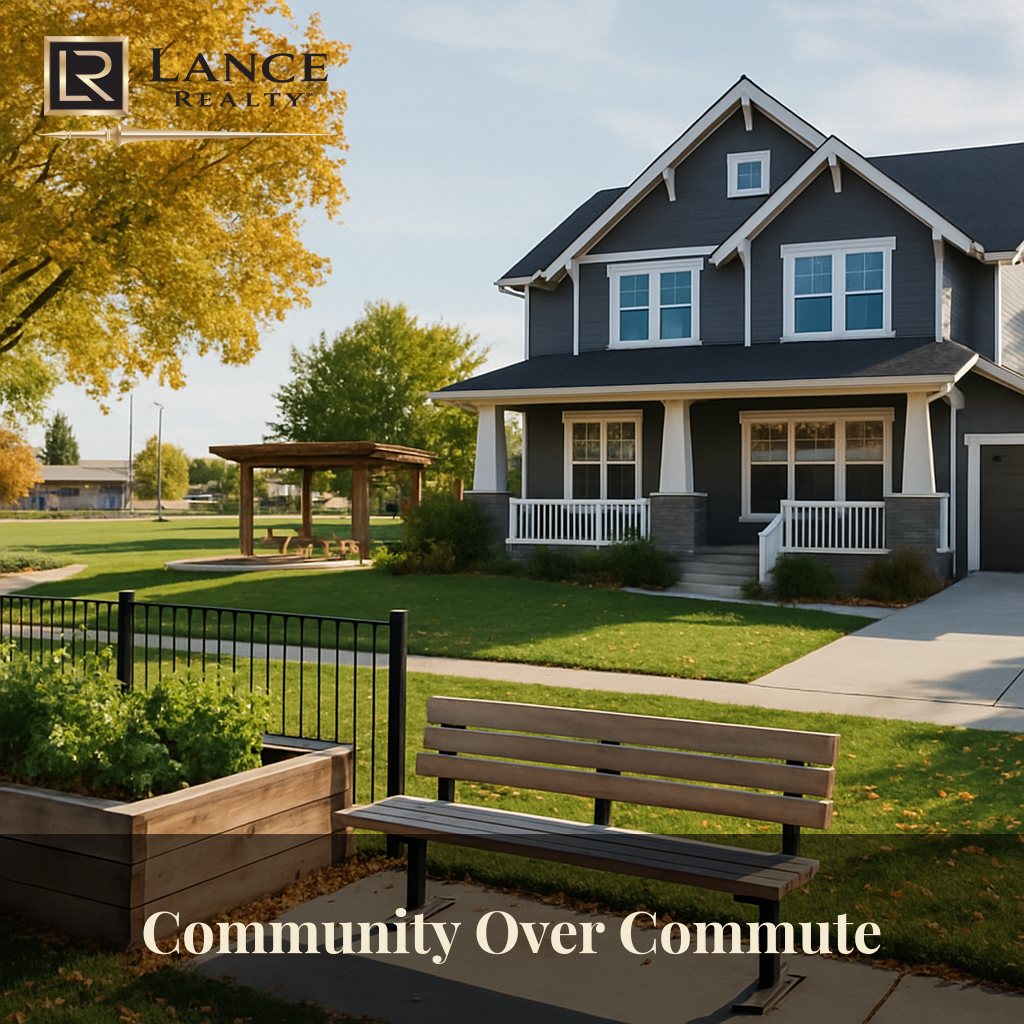
What California Buyers Should Know About Twin Falls Neighborhoods Before Moving to Southern Idaho
You can look at Twin Falls home prices all day. You can compare square footage and lot size. But here's what most California buyers don't think about until they're already packing: what does community actually feel like here?
That's not something you get from a listing description. It's what you learn when you spend time in a city, talk to people who live there, and understand what makes one neighborhood different from another. And in Twin Falls, those differences matter.
What Twin Falls Feels Like
Twin Falls sits in Southern Idaho's Magic Valley, about two hours southeast of Boise. It's not part of the Treasure Valley metro, and that's part of the appeal. The pace is slower. The town is smaller. The vibe is more grounded.
You're not getting Boise's restaurant scene or Eagle's newer subdivisions. What you are getting is a place where people know their neighbors, where kids can still ride bikes to school, and where your California equity goes a lot further without the Treasure Valley price tag.
Twin Falls has about 52,000 people. It's big enough to have good schools, parks, shopping, and healthcare. Small enough that you don't spend half your life in traffic. If you're coming from the Bay Area or Southern California, that shift takes some getting used to. Most buyers tell me it's exactly what they wanted, they just didn't realize how different it would feel until they got here.
Schools That Shape the Community
Twin Falls School District 411 serves most of the city. You've got Canyon Ridge High School on the west side and Twin Falls High School closer to downtown. Both draw strong community support. Sports matter here. So do FFA, music programs, and student involvement.
Elementary schools like Oregon Trail and Sawtooth are neighborhood anchors. Parents walk their kids to school. You see the same families at games, at parks, at local events. It's a different rhythm than what most California families are used to, and it's one of the things people value most after they move.
If you're choosing a neighborhood in Twin Falls, start with the school boundary map. Not because test scores are the only thing that matters, but because schools shape where families settle, how neighborhoods feel, and what kind of community you're joining.
Parks and Recreation
Twin Falls has more outdoor access than most people expect. Shoshone Falls is the obvious one. It's higher than Niagara, and it's right in town. You can't see it from most neighborhoods, but you can get there in ten minutes.
Dierkes Lake is another local favorite. It's a spring-fed swimming spot with cliff jumping, picnic areas, and trails. In the summer, it's packed. The rest of the year, it's quiet and you can have the place to yourself.
For everyday use, you've got neighborhood parks throughout the city. Harmon Park has sports fields, playgrounds, and a skate park. CSI's campus has walking paths that connect to the city's trail system. It's not Boise's Greenbelt, but it's functional and well-maintained.
If you're into mountain biking, hiking, or anything outdoors, you're within range of the Sawtooth National Forest, Craters of the Moon, and Sun Valley. Twin Falls is a good base for weekend trips without the Boise metro crowds or prices.
Local Businesses and What Gives Each Area Character
Downtown Twin Falls has been rebuilding for the past decade. You've got locally owned coffee shops, breweries, restaurants, and small retail. It's not polished, but it's authentic. Koto Brewing, Elevation 486, and Glanbia Foods anchor the food and drink scene. The farmers market runs downtown in the summer and draws a solid crowd.
Blue Lakes Boulevard is the main commercial corridor. That's where you'll find most of your chain stores, grocery options, and services. It's functional, not charming. But everything you need day-to-day is there.
The west side of Twin Falls, near Canyon Ridge High School, is where most of the newer residential growth has been. It's more suburban, more family-oriented, and closer to big-box retail. The east side and areas closer to downtown tend to have older homes, more mature trees, and a slightly different feel.
None of this is dramatic. Twin Falls doesn't have the sharp contrasts you see between, say, Eagle and Nampa. But the differences are real, and they matter when you're deciding where you want to land.
What Residents Actually Say About Living Here
I talk to a lot of California buyers who moved to Twin Falls in the past few years. Here's what comes up most often.
They love the affordability. A $450,000 budget in Twin Falls gets you a newer single-family home with a yard, garage, and space. That same budget in Meridian or Eagle gets you into the market, but you're making compromises. In most California markets, it doesn't get you much at all.
They appreciate the slower pace. You're not fighting traffic. You're not navigating crowds everywhere you go. Errands take twenty minutes, not two hours.
And they value the community feel. People talk to each other here. Kids play outside. Families know their neighbors. It sounds small, but for a lot of California buyers, that's the whole reason they moved.
The trade-offs? Twin Falls doesn't have the dining, entertainment, or cultural options you get in Boise or a major California metro. The job market is smaller. The winters are cold. And if you're used to being fifteen minutes from everything, the distance to Boise or Salt Lake takes some adjustment.
But for buyers who want space, affordability, and a genuine sense of community, Twin Falls delivers. You just have to know what you're getting into before you make the move.
Market Conditions Right Now
Twin Falls is in a balanced market. You've got about 156 homes available and roughly 3.1 months of supply. That's not a buyer's market, but it's not the feeding frenzy Boise saw in 2021 either. You have time to look, compare options, and make a decision without panic.
Southern Idaho markets, including Twin Falls and Idaho Falls, are seeing stable growth. New construction is actively adding housing units in the Twin Falls area, especially in entry-level and move-up price ranges. That gives buyers more options than they've had in years.
Statewide, Idaho home price appreciation in 2026 is projected to fall in the 3% to 5% range. Twin Falls and other rural markets are forecast to see more modest increases, around 2% to 4%. That's a huge shift from the double-digit jumps we saw a few years ago, and it gives buyers some breathing room.
Mortgage rates are another factor. Freddie Mac's most recent survey shows the 30-year fixed rate at 7.03%, and the MBA projects rates will average around 6.5% through 2026 and into 2028. That's higher than anyone wanted, but it's also creating a market where buyers have more negotiating power than they did when rates were lower and competition was tighter.
Nationally, NAR Chief Economist Lawrence Yun projects the median home price will climb 4% in 2026, while Fannie Mae and Zillow are forecasting more modest growth. Inventory is up. NAR's August report shows unsold existing-home inventory at 1.62 million units, with supply reaching 4.9 months, the highest in more than a decade.
For a California buyer, this is the best market we've seen in years to relocate without overpaying or rushing a decision.
How to Choose the Right Neighborhood
Here's what I'd be looking at if I were in your shoes.
Start with schools. Even if you don't have kids, school boundaries shape neighborhoods, resale value, and community identity. Look at the district map and figure out which areas align with what you want.
Then think about daily life. Do you want to be close to downtown? Do you want newer construction on the west side? Do you care about proximity to parks, trails, or specific amenities?
Price is another big piece. Twin Falls is more affordable than the Treasure Valley, but there's still a range. Newer neighborhoods on the west side tend to run higher. Older areas closer to downtown or on the east side offer more entry-level options.
And don't skip the drive test. Spend a day in Twin Falls. Drive through neighborhoods. Stop at parks. Grab coffee downtown. Talk to people. You'll learn more in three hours on the ground than you will in three weeks looking at listings online.
My job is to help you see the full picture before you make a move. That means understanding not just what's for sale, but which city fits your lifestyle, budget, and long-term goals.
Final Thought
Moving to Twin Falls isn't about finding the cheapest home in Idaho. It's about finding the right community for your family. The schools, parks, and local businesses that make a neighborhood feel like home matter just as much as the house you buy.
If you're serious about relocating, spend time learning what makes each area different. Talk to people who live there. Ask honest questions. And make sure you're landing in a place that fits, not just a place that's available.
Planning a move from California to Idaho? Visit our California to Idaho Relocation FAQ for straight answers on costs, cities, taxes, and the ListBuySave plan.
Barry Lance | Owner/Broker/Realtor® | 208-488-1433 | [email protected] | LanceRealty.com



